
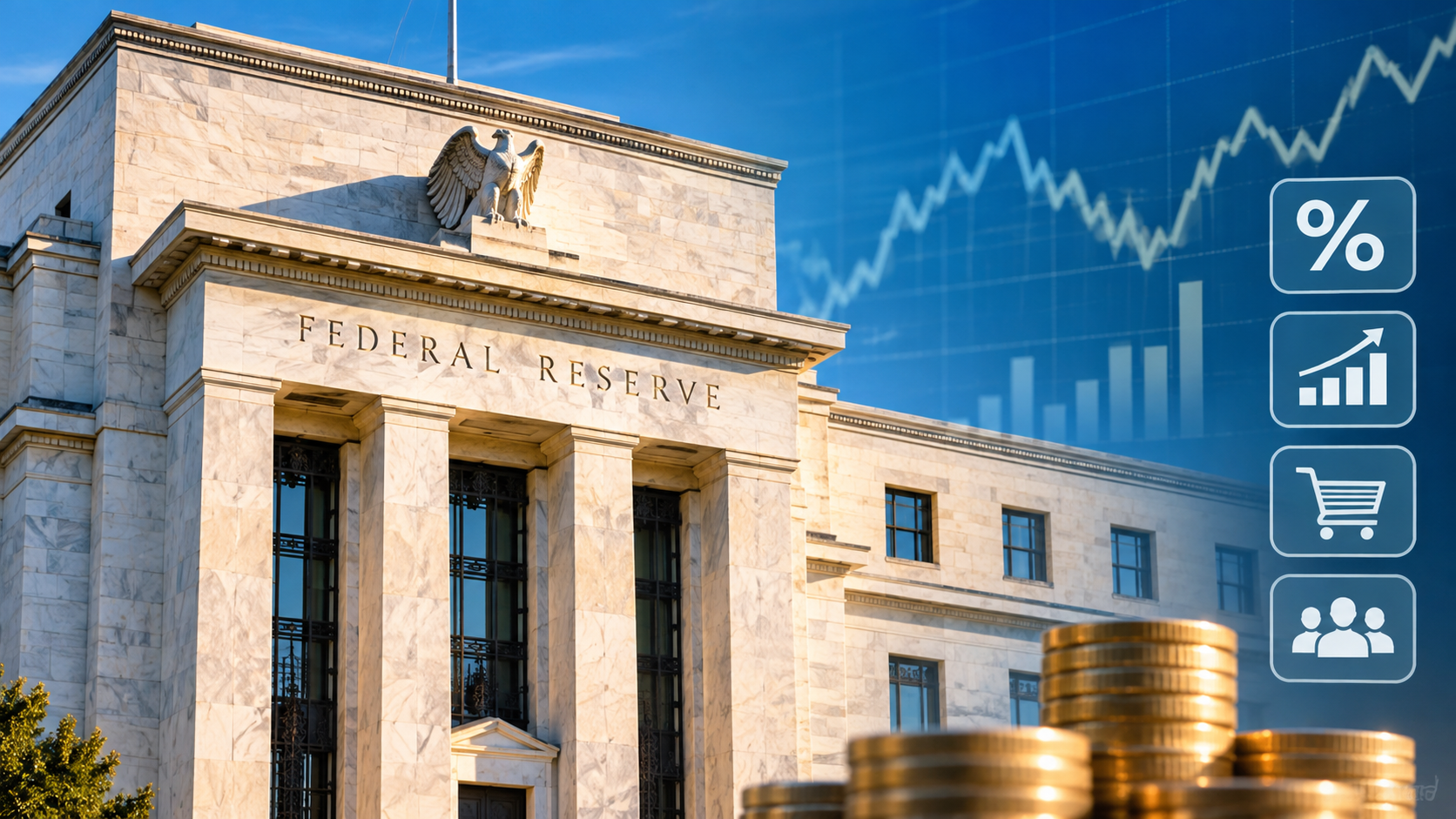
Introduction: Why the Federal Reserve Matters to Every Business Leader
| Author: Eric Compton, CFA | Compiled by Emelia Fredlick |
| January 13, 2026 |
The Federal Reserve may seem distant from the day-to-day responsibilities of running a business, but its decisions influence nearly every aspect of the economic environment in which organizations operate. From borrowing costs and capital investments to consumer spending and workforce planning, monetary policy plays a critical role in shaping business opportunities and risks.
In Morningstar’s article, What Is the Federal Reserve and How Does It Work?, Eric Compton, CFA, explains the Federal Reserve’s responsibilities, the tools it uses to manage economic conditions, and how its decisions affect investors and the broader economy.
For business leaders, the central message is clear: Understanding Federal Reserve policy is not simply an exercise in economic literacy. It is an essential component of strategic planning, financial resilience, and informed leadership.
The article provides a useful foundation for understanding how interest rates, inflation, employment, and monetary policy interact—and why leaders should incorporate these forces into their business decisions.
Morningstar
Five Key Takeaways for Business Leaders
- The Federal Reserve balances two essential economic objectives.
Its dual mandate of maximum employment and stable prices creates important trade-offs. Leaders should recognize that actions designed to control inflation can also slow economic activity and hiring.
- Interest-rate decisions affect business profitability.
Higher rates generally increase financing costs and reduce borrowing demand. Lower rates can encourage investment and consumption. Both can change a company’s growth prospects.
- Inflation management requires long-term thinking.
The Fed’s 2% inflation objective reflects the importance of price stability. Businesses must consider how inflation affects supplier contracts, wages, pricing strategies, and purchasing power.
- Monetary policy involves more than changing interest rates.
Quantitative easing, quantitative tightening, and forward guidance influence financial conditions and market expectations. Leaders benefit from understanding these tools rather than focusing exclusively on rate announcements.
- Economic uncertainty makes scenario planning essential.
Supply shocks, changing employment conditions, and shifting inflation expectations complicate Federal Reserve decisions. Organizations should prepare for multiple economic outcomes instead of relying on one forecast.
Leadership Talking Points
These insights can help frame executive team meetings, board discussions, and strategic planning sessions.
- Cost of capital: How would sustained higher interest rates affect our borrowing, expansion, and investment priorities?
- Customer behavior: Are our customers sensitive to financing costs, inflation, or changes in disposable income?
- Workforce strategy: How might shifts in employment and economic growth influence recruitment, compensation, and retention?
- Financial resilience: Do we have sufficient liquidity and flexibility to withstand unexpected changes in monetary policy?
- Strategic opportunities: Could changing interest rates create opportunities for acquisitions, refinancing, or investments in productivity?
Reflection Questions for Business Leaders
- How effectively does our leadership team translate economic developments into operational decisions?
- Are we reacting to Federal Reserve announcements, or anticipating their potential implications?
- Which parts of our business are most vulnerable to higher borrowing costs or persistent inflation?
- How might different economic scenarios change our strategic priorities over the next 12–24 months?
- What economic indicators should our leadership team monitor regularly?
Potential Action Items
| Action | Business value |
| Review debt exposure and refinancing schedules | Identify interest-rate vulnerabilities |
| Develop high-, base-, and low-rate financial scenarios | Improve financial preparedness |
| Monitor inflation, employment, and Fed communications | Strengthen economic awareness |
| Reassess capital expenditures and investment timing | Improve capital allocation |
| Incorporate monetary policy into quarterly strategy reviews | Connect economic developments with business decisions |
A Practical Leadership Perspective
The Federal Reserve does not control every economic outcome, nor can its decisions eliminate uncertainty. Its policies nevertheless influence the environment in which businesses compete, invest, hire, and grow.
Effective leaders do not need to predict every interest-rate decision. They need to understand the potential consequences, identify their organization’s exposure, and develop strategies that remain resilient across different economic conditions.
The leadership opportunity is to move from simply following economic headlines to incorporating economic intelligence into strategic decision-making.