
Influence Without Authority
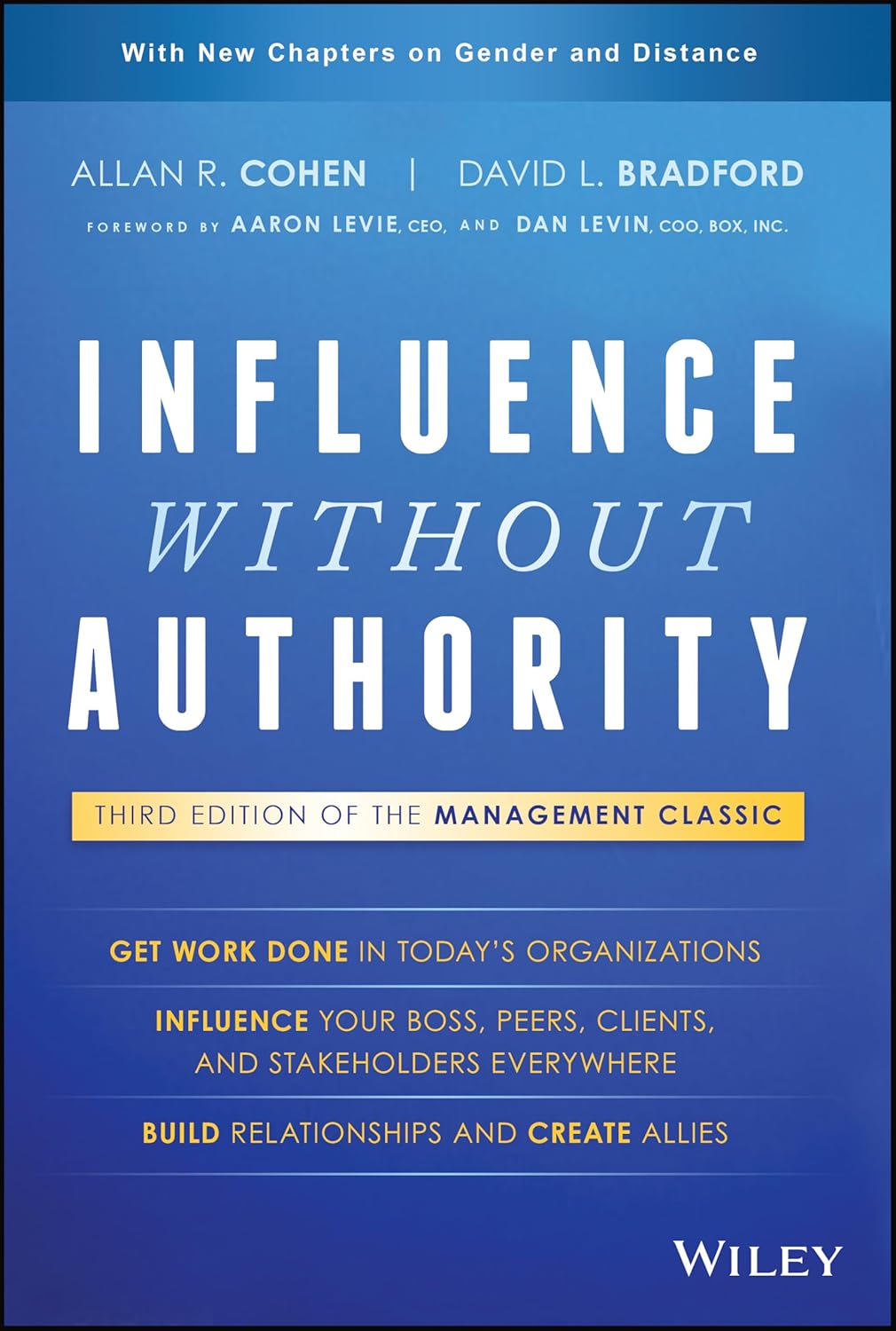
Influence Without Authority
This is a practical book for a real problem: how do you lead when you don’t control? No title. No formal power. Just responsibility and expectations.
Most leaders run into this wall quickly. You need things done across teams, functions, or personalities that don’t report to you. That’s where this book earns its place. It reframes influence as a disciplined exchange—not persuasion, not charm, not force.
It’s a mindset shift. And it matters.
The Core Idea: Influence Is an Exchange
Allan Cohen and David Bradford are direct about it—people don’t do things because you need them to. They do things because it makes sense for them.
That’s the game.
You stop asking, “How do I get them to do this?”
You start asking, “Why would they want to?”
Simple. Not easy.
Influence becomes a series of trades. Value for value. You give something they care about in return for what you need.
No trade, no movement.
The Five Currencies of Influence
Not all value is equal. And not everyone values the same things.
The authors break influence into currencies—what people actually care about.
1. Inspiration (Vision and Meaning)
Some people want purpose. They want to feel part of something bigger.
Give them that.
Tie your request to mission, impact, or long-term value. Help them see why it matters beyond the task.
2. Task-Related (Resources and Help)
Others care about getting their work done better or faster.
Offer support. Share resources. Remove friction.
Make their job easier.
3. Position-Related (Recognition and Visibility)
Recognition matters more than most leaders admit.
Public credit. Visibility with senior leadership. Access.
These are powerful currencies.
4. Relationship-Related (Connection and Trust)
Some people value connection. Loyalty. Being respected.
Time matters here. So does consistency.
You earn this slowly. You lose it quickly.
5. Personal (Autonomy and Growth)
Control, flexibility, development.
People want room to grow and the freedom to operate.
Give them space. Give them opportunity.
The Discipline: Understand Before You Ask
Most leaders skip this step. They go straight to the ask.
That’s a mistake.
You have to diagnose before you influence.
-
What pressures are they under?
-
What do they care about right now?
-
What does success look like for them?
If you don’t know this, you’re negotiating blind.
And people can feel that.
The Trap: You’re Not the Center
Here’s where most influence efforts fail.
You assume your priority is their priority.
It’s not.
They have their own goals, constraints, and incentives. Your job is to connect your objective to their reality.
That takes work. And humility.
Building Influence Before You Need It
The best time to build influence is before you need something.
Relationships matter. Trust matters.
If every interaction is transactional, people see it. And they resist.
Invest early.
-
Help without asking
-
Share credit
-
Show up consistently
When the moment comes, you’re not starting from zero.
When Resistance Shows Up
It will.
And when it does, pushing harder rarely works.
Step back.
Ask better questions. Reframe the exchange. Adjust the value.
Influence is not about winning. It’s about alignment.
Practical Takeaways
-
Stop relying on authority you don’t have
-
Start thinking in terms of exchange
-
Identify what the other person values
-
Build relationships before the ask
-
Trade fairly—and visibly
This is not manipulation. It’s clarity.
Reflection Questions
-
Where are you relying on position instead of influence?
-
Do you know what your key stakeholders actually value?
-
What “currency” do you consistently overlook?
-
Who do you need to build a relationship with—before you need something?
-
When was the last time you offered value first?
-
Are your requests aligned with their goals—or just yours?
-
What would change if you treated influence as an exchange every time?
Author Perspective
Allan Cohen and David Bradford spent decades studying leadership inside complex organizations—places where authority alone doesn’t work. Their work at Harvard and Stanford grounded this book in real-world dynamics rather than theory.
They’ve seen what happens when leaders try to push without understanding.
It fails.
Final Thought
You don’t need more authority.
You need more awareness. More discipline. More intent.
Influence is earned. One exchange at a time.
Start there.
