
The Only Math Book You’ll Ever Need
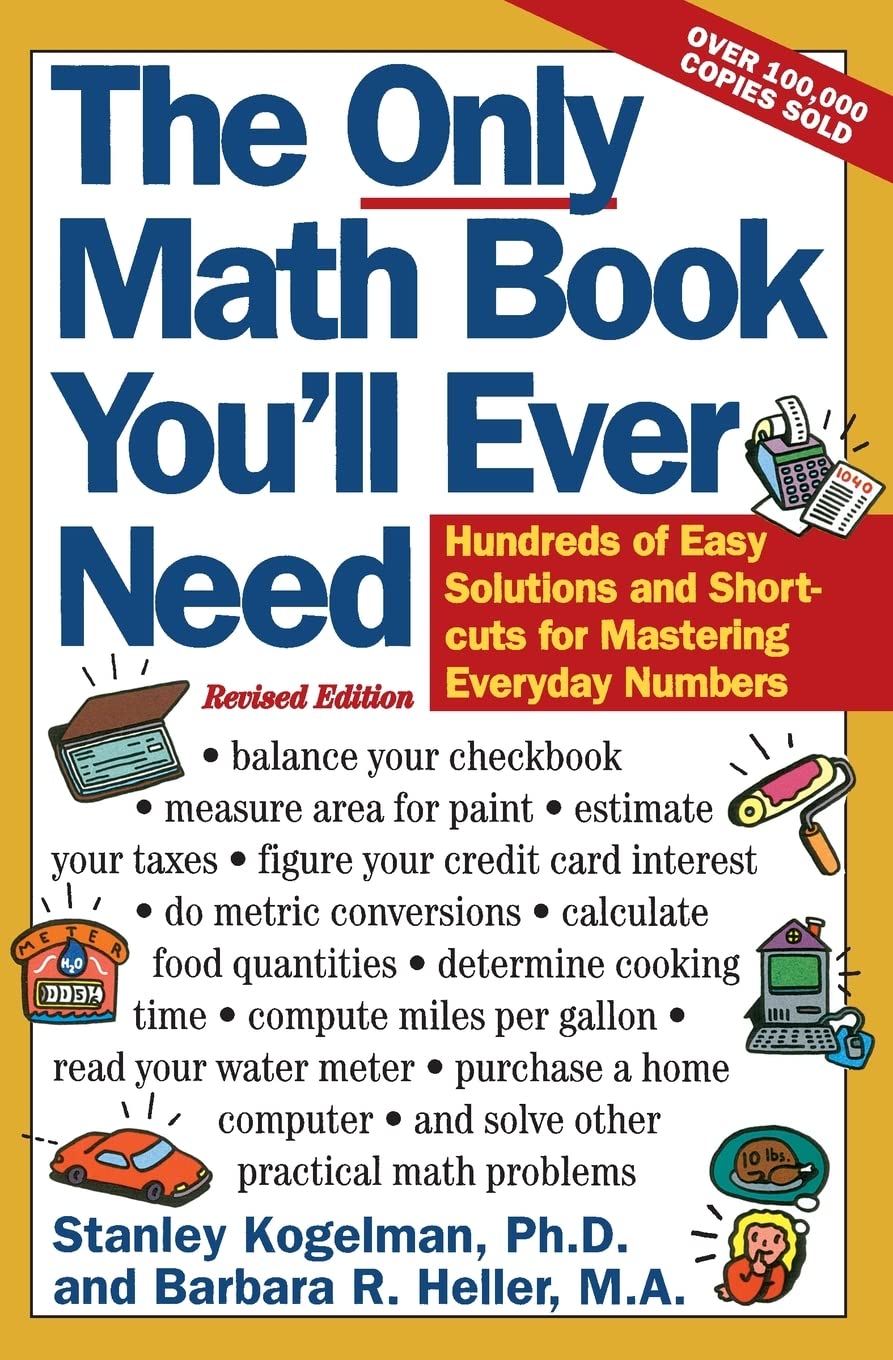
The Only Math Book You’ll Ever Need
Why This Book Matters
Most people don’t hate math. They hate how it was taught.
This book understands that. It doesn’t try to make you a mathematician. It gives you control over numbers that show up in real life—money, measurements, decisions, and risk. That’s where math actually matters.
I’ve seen leaders avoid numbers they didn’t trust. It costs them. This book quietly removes that excuse.
The Core Idea
You don’t need advanced math. You need working math.
The kind you use without thinking. The kind that helps you make faster, better decisions under pressure. This book is built around that principle—simple tools, clear explanations, and shortcuts that stick.
It respects your time. And your intelligence.
Key Ideas That Drive the Book
1. Math Is a Practical Tool, Not an Academic Exercise
The authors strip math down to its usefulness. Percentages, ratios, fractions, interest—these are not abstract concepts. They are daily tools.
Think about it:
- Pricing decisions
- Profit margins
- Loan costs
- Time estimates
If you hesitate on these, you slow down. If you’re confident, you move.
That’s the game.
2. Estimation Is More Valuable Than Precision
Most decisions don’t require perfect answers. They require good enough, quickly.
This book leans into estimation—rounding, approximating, and simplifying. It teaches you how to get close fast.
And that matters more than being exact.
Speed beats perfection in most business decisions.
3. Percentages Run the World
If you take one thing from this book, take this:
Learn percentages cold.
The book drills this concept from every angle—discounts, markups, tips, interest, growth. Because once you understand percentages, you start seeing leverage everywhere.
Margins become clearer. Deals become clearer. Mistakes become obvious.
Numbers start talking. You start listening.
4. Break Problems Down Until They’re Easy
Complex math scares people because it looks like one big problem.
It never is.
The authors consistently break problems into smaller steps. Add, subtract, multiply—done in sequence. Nothing fancy.
This is a leadership principle, too.
Big problems rarely stay big when you break them down.
5. Mental Math Builds Confidence
You don’t need a calculator for everything.
In fact, over-reliance on tools creates hesitation. This book gives you shortcuts to calculate in your head—fast.
Why does that matter?
Because confidence shows up in moments.
In meetings. In negotiations. In decisions.
You either trust your numbers, or you don’t.
6. Understanding Money Math Changes Behavior
Interest rates. Loans. Savings. Compounding.
This book makes these visible.
Once you truly understand how interest works—especially compounding—you don’t look at money the same way again. You see the cost of delay. The benefit of discipline.
You start making different choices.
Better ones.
7. Charts, Tables, and Visuals Are Decision Tools
The book includes charts and quick-reference tables for common calculations. That’s not filler. That’s leverage.
Leaders don’t need to memorize everything. They need access to clarity.
This book gives you that.
Where This Shows Up in Real Life
- Pricing a product without guessing
- Evaluating a deal quickly
- Understanding financial statements at a glance
- Managing personal finances with discipline
- Avoiding costly math mistakes others miss
It’s not about math.
It’s about judgment.
A Few Lines That Capture the Spirit
“Math is not about numbers—it’s about understanding.”
“The simplest way is usually the best way.”
Reflection Questions
- Where do you currently avoid numbers—and why?
- How often do you rely on others for basic financial understanding?
- Are you fast with percentages, or do you hesitate?
- What decisions in your business would improve with better number clarity?
- Do you estimate quickly or wait for perfect data?
- Where has a lack of math confidence cost you money or time?
- What would change if you trusted your own calculations?
Applications Worth Acting On
Start small.
- Practice mental math daily—tips, discounts, margins
- Revisit your pricing model with sharper percentage thinking
- Review your personal finances through the lens of compounding
- Push yourself to estimate before reaching for a calculator
Do it consistently.
It compounds.
About the Authors
Stanley Kogelman and Barbara R. Heller built their careers around making math accessible. Their work focuses on stripping away complexity and helping everyday people use math with confidence in real situations—finance, business, and daily life. They’re not trying to impress you. They’re trying to equip you.
And they do.