
The Rules of Thinking
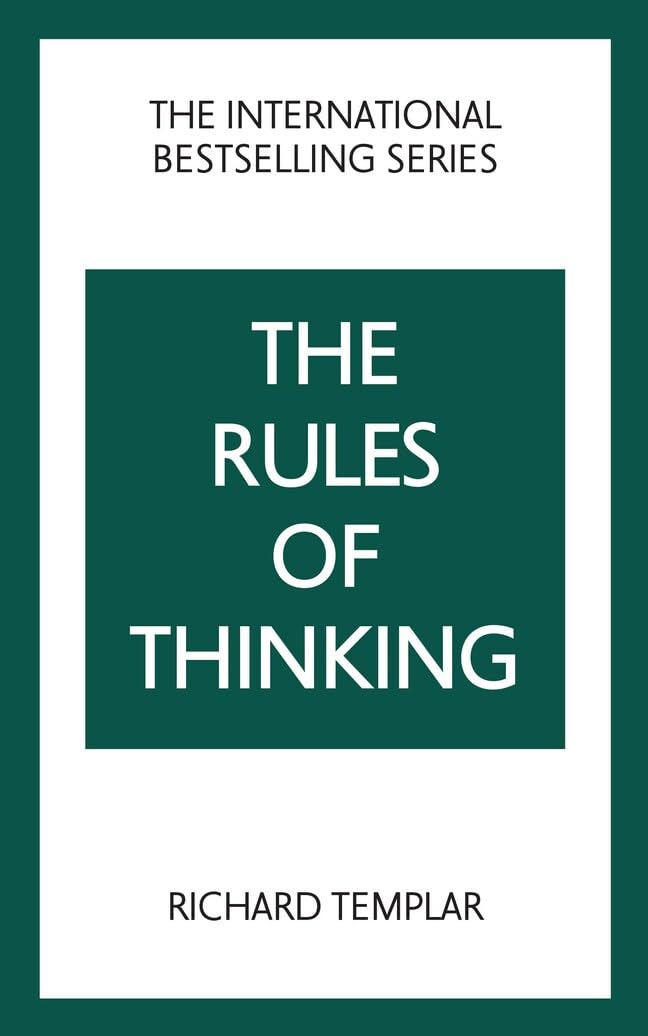
The Rules of Thinking — Why I Recommend It
Running a business is a thinking sport. You win or lose on the quality of your judgments, not the volume of your activity. The Rules of Thinking is a concise, practical playbook for cleaner decisions, calmer focus, and fewer self-inflicted mistakes. It’s everyday mental hygiene—how to notice sloppy thinking, reduce noise, and choose well when it counts.
What It’s Really About
Upgrading your “inner operating system.” Templar lays out short, memorable rules that help you pause, frame, and decide with intention. You learn to separate facts from stories, signal from noise, and first-order results from second- and third-order consequences. It’s thinking on purpose instead of being dragged around by urgency, emotions, or other people’s agendas.
Author & Publication
Richard Templar—author of the bestselling “Rules” series (The Rules of Work, The Rules of Management, The Rules of Life)—writes in punchy, workable bites you can apply the same day. The Rules of Thinking is part of that series and follows the same clean format: brief rules, plain language, practical examples.
Why This Matters to Business Owners
-
Clarity beats chaos. When you’re clear on the problem, the solution shows up faster.
-
Attention is capital. Where your mind goes, your company goes.
-
Bias is expensive. Unchecked assumptions waste cash, time, and trust.
-
Simple beats clever. The right rule of thumb, used consistently, outperforms complicated plans you never finish.
14 Practical Rules (Templar-style, in my words)
-
Get your head clear before you choose. Breathe, name the decision, write one sentence: What exactly am I deciding?
-
Frame the problem, not the noise. Facts on the left, assumptions on the right—decide which assumptions must be tested first.
-
Think forward, backward, and sideways. Ask outcomes, risks, and unintended consequences before you act.
-
Keep it simple on purpose. If you can’t explain the choice in 60 seconds, you don’t own it yet.
-
Beware the first story you tell yourself. Check for confirmation bias; demand the disconfirming datapoint.
-
Do the rough math. Ballpark the upside, cost, time, and risk. Vague fear/excitement gets clearer with numbers.
-
Decide like a leader, not a passenger. Pick your principle (speed, quality, cost), then let it drive the trade-offs.
-
Default to test-and-learn. When possible, run the cheap, fast experiment instead of the big bet.
-
Use other minds. Invite a dissenting view: What am I missing? Where does this break?
-
Watch your words. Swap “should” for “will”; replace “always/never” with specifics. Language shapes thinking; thinking shapes action.
-
Protect your attention. Batch email, kill non-essential notifications, and block thinking time on your calendar.
-
Decide once, execute many. Turn good decisions into simple rules and checklists your team can run without you.
-
Close the loop. After each key decision: what we expected, what happened, what we’ll change next time.
-
Persist without drama. Progress beats perfection—ship, learn, adjust.
Field Notes for Leaders
-
Clarity scales; confusion multiplies. A clear decision becomes a clear brief becomes clean execution.
-
Emotions are data, not directions. Note them; don’t let them drive.
-
If everything’s urgent, nothing is. Decide what matters most, then let the rest take a number.
-
Beware false precision. An 80% answer today beats a perfect answer next quarter.
Who Should Read This
-
Owners who feel spread thin and reactive
-
New managers who need a shared, simple language for decisions
-
Teams that want less drama and more signal in their day
A Line I Keep Coming Back To
Think on purpose. Slow the moment, choose your frame, and your next move gets obvious.
How to Read It (Quick Plan)
-
Pass 1 (90 minutes): Mark 10 rules that hit your current challenges.
-
Pass 2 (one week): Practice one rule per day—apply it to a real decision, not a hypothetical.
-
Pass 3 (one hour): Pick the three rules that helped most and bake them into your weekly rhythm.
A Simple Thinking Toolkit (Drop-In Templates)
Decision One-Pager
-
Decision:
-
Success by [date]:
-
Options (3):
-
Facts / Assumptions:
-
Risks & Mitigations:
-
Next smallest step:
Weekly Thinking Block (45 min)
-
Top 3 priorities → Are they still the top 3?
-
One risky assumption to test this week
-
One decision to make or delegate
-
One thing to stop doing
After-Action (15 min)
-
What we expected vs. what happened
-
What surprised us
-
What rule we’ll apply next time
Final Word
The Rules of Thinking is quiet power. It helps you strip away noise, aim your attention, and make cleaner choices—again and again. If you want less stress, fewer do-overs, and steadier execution, this book will sharpen how you think so everything else gets easier.
