
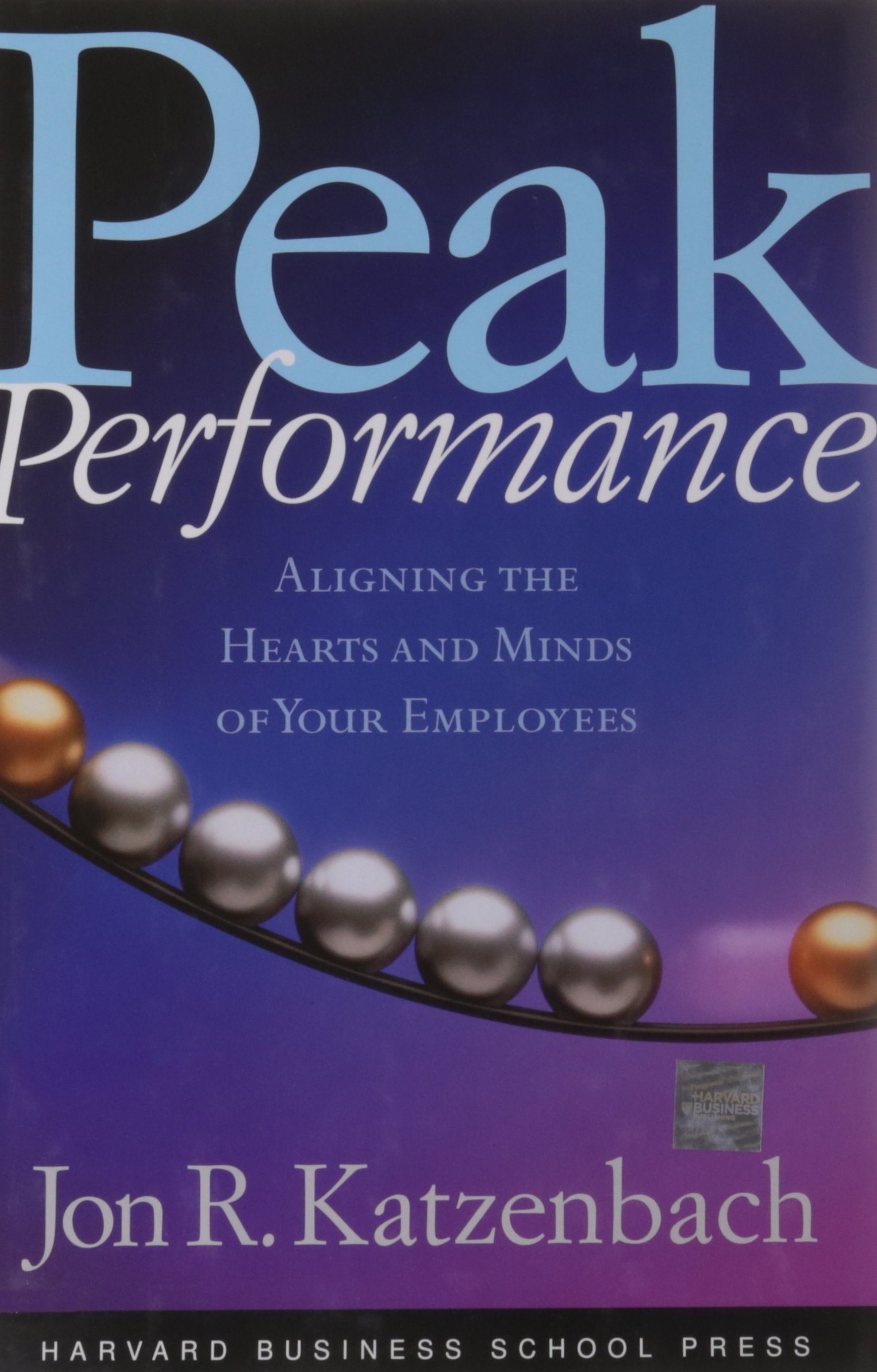
Peak Performance: Aligning The Hearts and Minds of Your Employees
Introduction
In the pursuit of organizational excellence, aligning the hearts and minds of employees is crucial. Jon R. Katzenbach’s “Peak Performance: Aligning the Hearts and Minds of Your Employees” provides a comprehensive guide to achieving high levels of performance by engaging employees effectively. This summary explores the essential strategies and practical insights from Katzenbach’s work, highlighting how organizations can inspire and sustain peak performance.
Mission, Values, and Pride
Katzenbach emphasizes the importance of a strong mission, core values, and a sense of pride in achieving peak performance. Organizations must:
- Instill a Noble Purpose: A clear and compelling mission that resonates with employees’ personal values can create a strong sense of purpose and motivation. Employees are more likely to put in their best effort when they feel their work contributes to a greater cause.
- Promote Rich History and Strong Values: Celebrating the organization’s heritage and core values helps build group cohesion and a sense of belonging. This fosters loyalty and a shared identity among employees.
- Foster Group Cohesion: Encouraging a sense of unity and collective identity among employees enhances commitment and loyalty. Group cohesion can be strengthened through team-building activities and shared goals.
Example: U.S. Marine Corps
The U.S. Marine Corps excels in aligning mission, values, and pride by:
- Selecting High-Caliber Individuals: The Corps recruits individuals with leadership potential and instills them with Marine philosophy through practical experience and mentoring. This ensures that every member aligns with the Corps’ values and mission.
- Articulating Core Values: New recruits are immersed in the Corps’ values from day one. Those who do not embrace these values do not advance. This rigorous value alignment ensures that only those who truly fit the Marine ethos remain.
- Energizing Collective Effort: Marines are motivated by the achievements of their peers, fostering a strong sense of pride and camaraderie. Recognizing and celebrating individual and team accomplishments helps maintain high morale and collective motivation.
Process and Metrics
Clear processes and precise metrics are essential for maintaining high performance. Organizations should:
- Define Clear Measures and Standards: Establishing transparent performance metrics helps employees understand expectations and track progress. Clear metrics provide a benchmark for performance and facilitate accountability.
- Focus on Performance Transparency: Regularly sharing performance data fosters accountability and continuous improvement. Transparency in performance metrics encourages a culture of openness and trust.
- Collaborate and Collectively Effort: Encouraging teamwork and collective problem-solving ensures that processes are effective and aligned with organizational goals. Collaborative efforts often lead to innovative solutions and improved efficiency.
Example: Avon
Avon’s success in the cosmetic industry is attributed to:
- Precise Standards: The company measures its workforce against specific standards, enabling it to meet market demands. These standards ensure consistency in product quality and customer service.
- Focused Processes: Avon’s structured processes ensure consistent quality and performance. The company continuously refines its processes to adapt to market changes and improve efficiency.
Entrepreneurial Spirit
Cultivating an entrepreneurial spirit within the organization can drive innovation and high performance. This involves:
- Creating Opportunities: Providing employees with opportunities to take initiative and act autonomously. Empowering employees to make decisions fosters a sense of ownership and accountability.
- Encouraging Risk-Taking: Allowing employees to take calculated risks and learn from mistakes. An environment that tolerates failure as a part of the learning process encourages innovation.
- Fostering Healthy Competitiveness: Promoting a culture where healthy competition drives performance and innovation. Competition can spur individuals and teams to push their limits and achieve higher standards.
Example: Hambrecht & Quist (H&Q)
Hambrecht & Quist fosters an entrepreneurial spirit by:
- Empowering Employees: Giving individuals the freedom to act and make decisions. This autonomy enables employees to pursue innovative ideas and solutions.
- Encouraging Innovation: Supporting entrepreneurial endeavors within the company. H&Q’s culture of innovation attracts and retains top talent, driving the company’s success in financing rapidly growing entrepreneurial companies.
Individual Achievement
Recognizing and celebrating individual achievements is vital for motivating employees. Organizations should:
- Focus on Personal Performance: Highlighting individual contributions and providing performance-based advancement opportunities. Recognizing individual efforts helps employees feel valued and appreciated.
- Offer High Earning Potential: Linking compensation to performance to incentivize high achievers. Performance-based rewards motivate employees to excel in their roles.
- Promote Personal Risk and Ownership: Encouraging employees to take ownership of their work and responsibilities. Giving employees the freedom to innovate and take risks can lead to significant breakthroughs and improvements.
Example: Home Depot
Home Depot achieves success by:
- Developing People: Committing to the growth and development of its employees through training and opportunities. Home Depot invests heavily in its workforce, recognizing that skilled and motivated employees are key to its success.
- Emphasizing Performance-Based Advancement: Rewarding high performers with career advancement and recognition. This approach ensures that talented employees are recognized and retained.
Recognition and Celebration
Recognition and celebration are crucial for maintaining high employee morale and engagement. Organizations can:
- Reward Loyalty and Adherence to Values: Recognizing employees who embody the company’s values and contribute to its mission. Consistent recognition of loyalty and adherence to values reinforces the desired behaviors.
- Celebrate Collective Achievements: Hosting events and celebrations to honor team successes and milestones. Celebrations foster a sense of community and shared accomplishment.
- Foster a Family-Like Environment: Creating a supportive and inclusive workplace where employees feel valued and respected. A family-like atmosphere encourages employees to support one another and work collaboratively.
Example: Marriott International
Marriott International excels in recognition and celebration by:
- Implementing the “Mr. Marriott Sr.” and “Bill” Approach: Encouraging employees to act in ways that align with the company’s values. This approach creates a strong cultural foundation.
- Providing Individual and Collective Praise: Recognizing both individual efforts and team accomplishments. Marriott’s recognition programs ensure that employees feel appreciated and motivated.
- Creating a Network Environment: Building a strong sense of community and support among employees. Marriott’s focus on employee well-being ensures that staff are able to provide exceptional service to guests.
Management Practices for Peak Performance
To achieve peak performance, organizations should adopt the following management practices:
- Create Strong Self-Images: Invest in training, development, and creating opportunities for employees. Show respect for all individuals, emphasize the importance of every job, and encourage mutual trust and confidence. A positive self-image enhances motivation and performance.
- Leverage Three Compelling Springs of Energy: Motivate employees through:
- Magnetic Leaders: Leaders with larger-than-life dreams who inspire and capture the imagination. Charismatic leadership can galvanize employees and drive them toward achieving ambitious goals.
- Dynamic Marketplaces: Environments with aggressive competitors and demanding customers. A challenging market environment can push employees to excel and innovate.
- Remarkable Legacies: Histories of accomplishment filled with legends, heroes, and martyrs. Celebrating the organization’s legacy and successes can inspire pride and commitment.
- Develop Disciplines: Cultivate self-discipline in areas such as punctuality, cost management, customer service, and recruiting and training. Establish a common language for communication and bonding. Discipline in these areas ensures consistent performance and operational efficiency.
- Instill a Sense of Ownership: Encourage employees to take ownership by providing access to company stock plans and giving managers control over significant decisions in their areas. Emphasize individual achievement and job enhancement. Ownership fosters a sense of responsibility and accountability.
- Distribute Leadership Broadly: Encourage input and innovation from all employees. Ensure that leadership and decision-making are shared across the organization to foster engagement and accountability. Broad-based leadership promotes a culture of inclusion and empowerment.
- Open Up Options and Opportunities: Create widespread opportunities for advancement and innovation. Allow employees to take risks, make mistakes, and learn from them. Enhance the work itself to ensure that jobs are meaningful and satisfying. Providing diverse opportunities ensures that employees remain engaged and motivated.
- Show People Their True Value: Constantly remind employees of their importance to the company, their families, and themselves. Understand and reward well-intentioned personal initiative. Recognizing employees’ contributions helps them feel valued and appreciated.
Conclusion
Jon R. Katzenbach’s “Peak Performance” offers valuable insights into how organizations can achieve and sustain high levels of performance by aligning the hearts and minds of their employees. By focusing on mission, values, processes, entrepreneurial spirit, individual achievement, and recognition, companies can create an environment where employees are motivated, engaged, and committed to excellence.
For small business owners and leaders, these principles provide a roadmap to fostering a high-performing workforce. Implementing these strategies can lead to greater employee satisfaction, improved performance, and long-term success. By understanding and leveraging the factors that drive peak performance, organizations can build a culture of excellence that propels them toward their goals.
In today’s competitive business landscape, the ability to inspire and maintain peak performance is a critical differentiator. By adopting the practices outlined by Katzenbach, organizations can ensure that their employees are not only productive but also deeply invested in the company’s success. This alignment of individual and organizational goals is the key to achieving sustained high performance and long-term success.
