
Corporate Social Responsibility
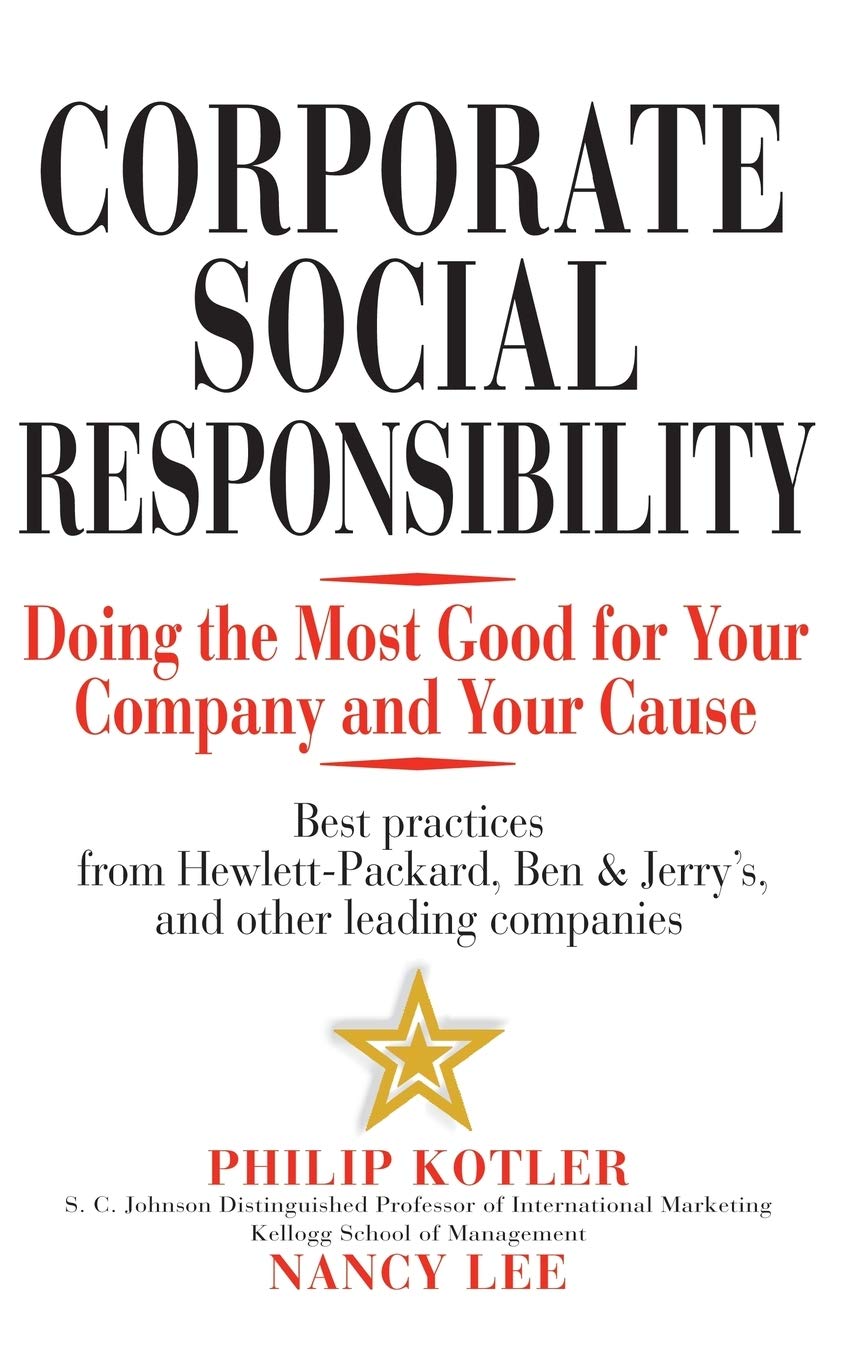
Corporate Social Responsibility
Philip Kotler and Nancy Lee don’t ask whether companies should be responsible. They assume it.
Their real question is sharper: How do you do it in a way that actually works—for society and for the business?
This is where most leaders get it wrong. Good intentions. Poor execution.
What CSR Really Is (In Their Framework)
They define CSR as a commitment to improve community well-being through discretionary business practices and contributions.
Two words matter here.
Discretionary. You choose to do it.
Well-being. It must actually help.
This isn’t compliance. It’s leadership.
The Six Types of CSR Initiatives
Kotler and Lee bring discipline by breaking CSR into six clear categories. This is one of the most useful frameworks in the book.
1. Cause Promotions
You fund awareness for a social issue.
Simple. Visible. Often shallow if done poorly.
2. Cause-Related Marketing
A portion of sales goes to a cause.
Effective when aligned. Cynical when forced.
3. Corporate Social Marketing
You drive behavior change (health, safety, environment).
This is deeper. You’re trying to influence how people live.
4. Corporate Philanthropy
Direct giving—money, grants, donations.
Necessary. But not enough on its own.
5. Community Volunteering
You mobilize employees to contribute time.
This builds culture internally. That matters.
6. Socially Responsible Business Practices
This is the big one.
How you operate every day:
- sourcing
- labor practices
- environmental impact
This is where credibility is won or lost.
The Core Idea: Alignment
Kotler is a marketer. He thinks in alignment.
CSR works when three things line up:
- The cause
- The business
- The customer
If those don’t connect, it feels like a stunt.
You’ve seen it before—companies attaching themselves to causes that have nothing to do with what they actually do.
People notice. Trust erodes.
Why Companies Do This (And Why That’s Okay)
Kotler is practical. He doesn’t pretend companies are charities.
CSR creates real business value:
- Stronger brand differentiation
- Increased customer loyalty
- Employee engagement and retention
- Better relationships with regulators and communities
Let’s be clear: Doing good and doing well are not in conflict.
But only if it’s real.
Execution Is Everything
This is where leaders earn their keep.
Kotler and Lee emphasize:
- Clear objectives
- Measurable outcomes
- Long-term commitment
- Authentic communication
Not campaigns. Systems.
You don’t “launch” CSR. You build it into how you operate.
The Risk: Performative CSR
They don’t use that exact phrase, but the idea is there.
If your actions don’t match your messaging, you create skepticism.
And skepticism spreads fast.
I’ve seen leaders spend more time talking about what they intend to do than actually doing it.
That never ends well.
Practical Takeaways
If you’re running a business, this is where I’d focus:
- Pick causes that connect to your business
- Commit for the long term, not the quarter
- Measure impact, not just activity
- Involve your people—it builds culture
- Start with how you operate, not what you donate
That last one matters most.
A Line Worth Holding Onto
“The best CSR programs are those that align a company’s business objectives with social causes.”
That’s Kotler thinking. Clear. Practical. Hard to argue with.
Reflection Questions
- What causes are naturally connected to your business—not just your brand story?
- Where are you spending money on CSR without measuring impact?
- Do your operations reflect the same values your marketing promotes?
- How involved is your leadership team in CSR decisions?
- Would your employees describe your efforts as real or performative?
- What would you stop doing if you were forced to prove impact?
Author Background
Philip Kotler is widely regarded as the father of modern marketing. Decades at Northwestern’s Kellogg School. His work shaped how companies think about markets, customers, and value.
Nancy R. Lee built her career applying marketing principles to social causes. She focuses on making CSR actionable—turning theory into programs that organizations can actually implement.
Together, they bring both strategy and execution. That combination shows.
Final Thought
CSR is easy to talk about. Hard to do well.
Kotler and Lee give you a blueprint. But it still comes down to committed leadership.
Make it real.
Make it measurable.
Make it matter.
That’s the work.