
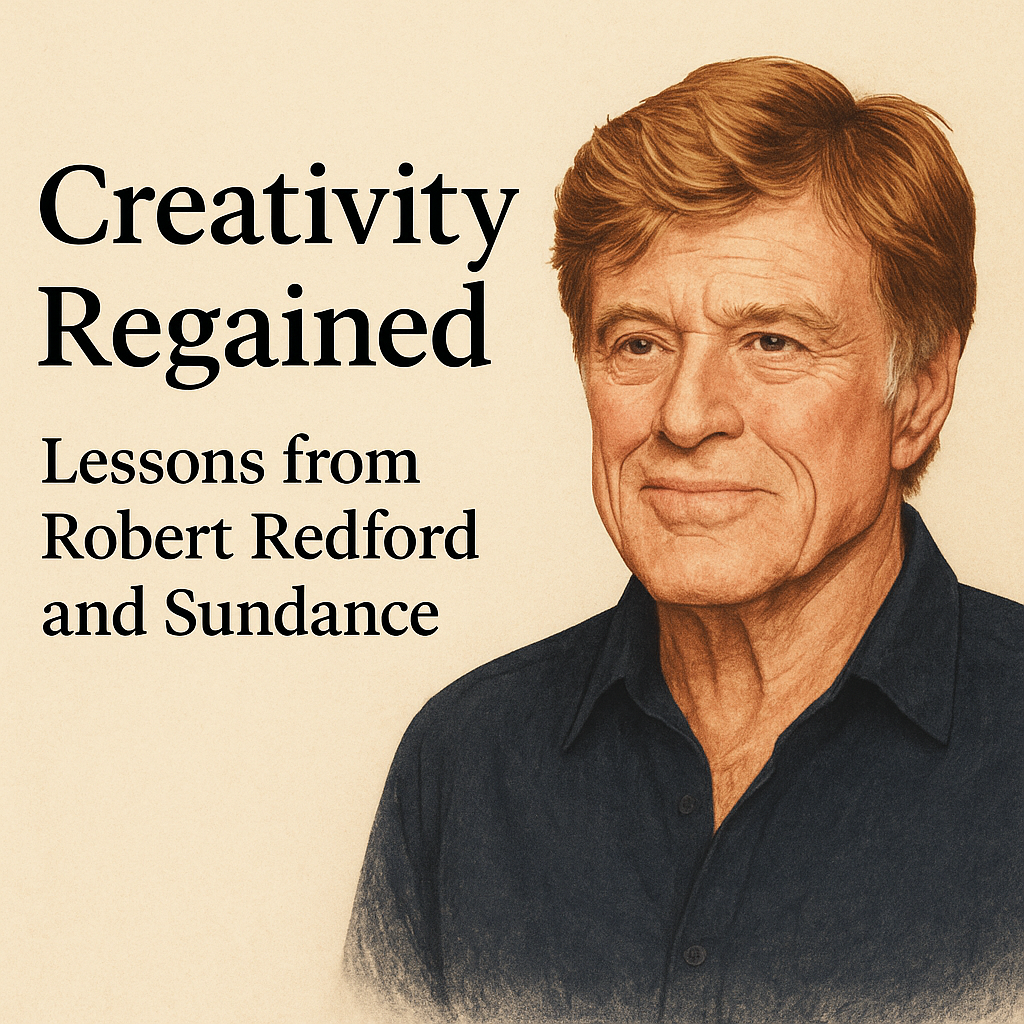
“Do you think the world was created by an accountant? No! The universe was created by the combustion of a creative explosion.” — Robert Redford
I decided to revisit this article after hearing about Robert Redford’s passing. Back when it first came out in Inc. magazine in 2003, I shared it often because it carried a message that inspired me as a business owner and coach. Redford may have been a movie star, but more importantly, he was an entrepreneur who built something from scratch that reshaped an entire industry. From everything I’ve read, he was also a good person and strived to use his platform to make the world a better place. His story is about staying true to a vision, keeping creativity alive, and refusing to let success turn into stagnation. Those lessons are just as relevant to small business owners today as they were then.
Starting Small, Thinking Big
In 1961, Redford bought two acres of land for $500 and built a log cabin in Utah. From that tiny beginning came Sundance—a name now recognized around the world.
The lesson for us? Don’t dismiss small beginnings. What matters is having a vision and the grit to keep building, even when no one else sees what you see yet.
Finding and Protecting Your Voice
At Sundance, people were chosen not for resumes or credentials, but for their voice—their unique way of telling a story.
It’s the same in business. Customers don’t remember you for being average. They remember you for being different. Your voice is what separates you from the crowd.
Reflection: What’s the voice of your business that no one else can copy?
The Gift of Contradiction
At Sundance, filmmakers often received conflicting advice from mentors. That wasn’t a problem—it was the point. The contradiction forced them to sharpen their own vision.
We run into the same thing as business owners. We get advice that pulls us in different directions. Instead of getting frustrated, we can use that tension to clarify what we really believe.
As Redford put it, “We need contradiction to get to truth.”
The Quality of Revenue
When investors pushed Redford to cut down trees and add more tables in his restaurant, he refused. He built around the tree instead and created a one-of-a-kind experience. That choice paid off—the restaurant is still successful today.
For me, that’s a reminder that not all revenue is good revenue. The quality of your revenue matters. Building something that lasts means choosing loyalty and reputation over quick wins.
Generosity Creates Collaboration
Redford built a culture at Sundance where people freely helped each other. Alumni came back as mentors, staff opened doors for artists, and Redford himself would take time with someone struggling.
Business works the same way. When we lead with generosity—of time, ideas, and support—we create trust. And trust is what fuels collaboration.
Storytelling Keeps Culture Alive
Every night at Sundance, people gathered to share stories—successes, failures, and lessons. That practice kept their culture strong.
Businesses often forget this. Without our own stories, we start borrowing tired lines from others. Our story is our strongest brand asset.
Never Let Success Make You Stale
Redford believed the moment you succeed is the exact moment you should reinvent yourself. Success has a way of making us comfortable—and comfort is dangerous.
For us as business owners, the challenge is the same: keep pushing, keep reinventing, keep growing. Yesterday’s win won’t carry us forward tomorrow.
Practical Ways to Spark Creativity
Here’s what we can take directly from the Sundance model and apply in business:
-
Expose yourself and your team to new voices and perspectives.
-
Hire for ideas, not just credentials.
-
Allow for mistakes and see them as part of learning.
-
Keep your company’s stories alive.
-
Focus on the quality of your revenue, not just the size of it.
-
Lead with generosity.
-
Reinvent yourself before the market forces you to.
Final Thought
Redford once said there is no endgame at Sundance—only continual evolution. That’s the mindset we need in business, too. Innovation isn’t about one big idea. It’s about building a culture where creativity is expected, supported, and celebrated. If you want growth, don’t start with spreadsheets. Start with imagination.
Reflection Checklist: Reclaiming Creativity in Your Business
-
What is the unique “voice” of my business that no competitor can replicate?
-
Am I chasing quality revenue that builds reputation, or just short-term sales?
-
Where am I resisting reinvention because I’ve grown comfortable with success?
-
How often do I invite in contradictory perspectives that challenge my assumptions?
-
Do I encourage my team to experiment and learn from mistakes, or do I punish failure?
-
How do we capture and share our company’s stories so they don’t get lost?
-
How am I personally modeling generosity and collaboration as a leader?
-
Are we hiring for raw creativity, or just safe credentials?
-
When I’m in conversations, do I seek new insights or just reinforce what I already believe?
-
If I had to reinvent my business tomorrow, what would I change first?
Closing Reflection
I used to share this article frequently because it hit on something I felt so many leaders overlook: the power of creativity in business. Numbers matter, but without imagination, those numbers eventually dry up. Redford reminded me—and the clients I’ve worked with—that real growth comes from taking risks, nurturing originality, and never letting success make you stale. As I look back on his passing, I’m reminded why his words still resonate. They challenge us to keep reinventing, to protect our voice, and to make sure our businesses are built not just to survive, but to truly create.
We lost an icon of film, business, and environmental activism the other day. While his legacy will surely live on, his creative presence will be missed.