
CEO Tools 2.0
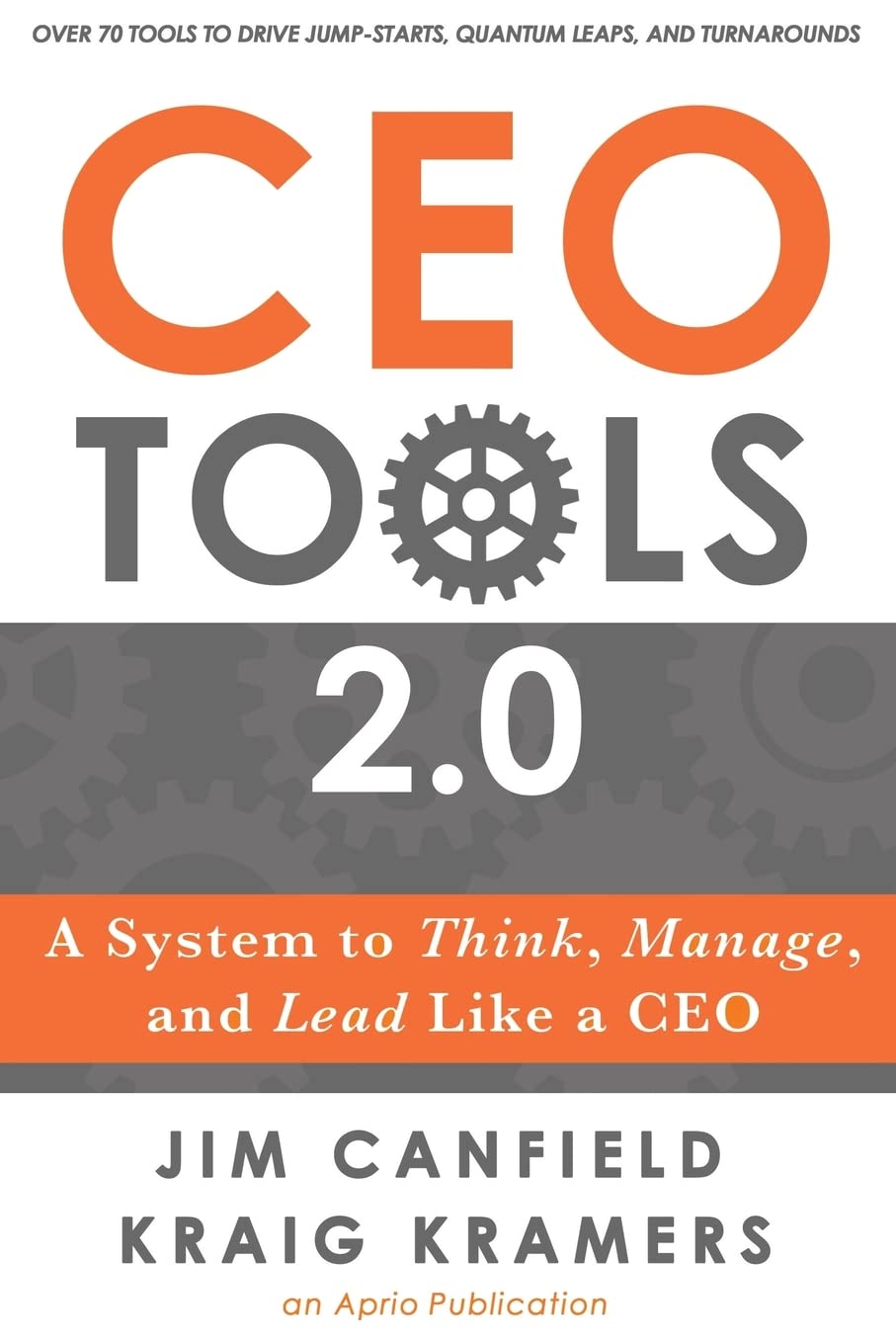
CEO Tools 2.0
Kraig Kramers and Jim Canfield
A field manual built from real work—and carried forward.
This book has a different weight to it.
Kraig Kramers built the original foundation with CEO Tools. After his passing, Jim Canfield extended and refined that work into CEO Tools 2.0—not as a rewrite, but as a continuation.
You can feel that when you read it.
It’s not trying to be clever. It’s trying to be useful.
The Core Idea: Tools Create Discipline
Most leaders don’t fail from a lack of knowledge.
They fail due to a lack of structure.
Kramers understood that. Canfield reinforces it.
You don’t rise to your intentions. You fall to your systems.
And if you don’t have systems—clear, simple, repeatable tools—you drift.
This book is about stopping that drift.
1. Decision-Making — Clarity Over Noise
I’ve seen this pattern too many times—teams circling the same issue for weeks.
Not because they’re incapable. Because they’re unclear.
The tools here force discipline:
- Define the real problem
- Clarify what success looks like
- Lay out real options
No hiding behind vague language.
Decisions get faster. Better. Cleaner.
2. Accountability — Make Ownership Obvious
Accountability isn’t cultural. It’s structural.
If ownership isn’t clear, accountability disappears.
Every time.
This book pushes you to:
- Assign one owner
- Define the outcome
- Track progress in the open
No shared responsibility. That’s where things go to die.
Who owns it?
That question should never take more than five seconds to answer.
3. Communication — Precision Wins
Most communication in organizations is noise.
Too many meetings. Too little movement.
Kramers and Canfield drive a simple shift:
- Every meeting has a purpose
- Every conversation has an outcome
- Every agenda drives action
Stop meeting to talk.
Start meeting to decide.
That’s the difference.
4. Priorities — Protect What Matters
Leaders say everything is important.
Then nothing gets done.
This book forces a narrowing:
- What matters now
- What matters next
- What doesn’t matter
Focus is a leadership decision.
If you don’t make it, the organization loses it.
5. Alignment — One Direction, Not Ten
Misalignment is quiet. And expensive.
You see it in:
- Conflicting priorities
- Different interpretations of success
- Teams pulling in opposite directions
The tools here create alignment around:
- Goals
- Metrics
- Expectations
So effort compounds instead of cancels out.
6. Execution — Where It Counts
Ideas don’t move businesses. Execution does.
This is where most leaders fall short.
The book keeps it simple:
- Break goals into actions
- Track those actions
- Adjust quickly
No overengineering. Just follow-through.
Consistency wins.
What This Book Is Really About
Kramers started something important.
Canfield carried it forward.
And the message is clear:
You don’t need more ideas.
You need better execution habits.
Tools make that possible.
Practical Takeaways
A few worth keeping in front of you:
- Define decisions before you debate them
- Assign ownership to one person—always
- Cut meetings that don’t produce outcomes
- Limit priorities to what you can actually execute
- Build systems that make follow-through visible
Simple rules. Hard discipline.
Reflection Questions
These are the ones that matter:
- Where are decisions slowing down—and what’s unclear?
- Do your people know exactly what they own? Or are they guessing?
- How many of your meetings would disappear if results were the standard?
- What are you calling “priority” that hasn’t moved in 90 days?
- Are you leading a focused organization—or a busy one?
Answer honestly.
That’s where the work starts.
Author Perspective
Kraig Kramers built the original CEO Tools from real-world leadership experience—focusing on practical systems that drive clarity and accountability.
After his passing, Jim Canfield expanded that foundation with CEO Tools 2.0, preserving the original intent while strengthening and extending the tools for modern leadership challenges.
This is not a reinvention.
It’s a continuation of work that was already proven.