
Founding Fathers on Leadership
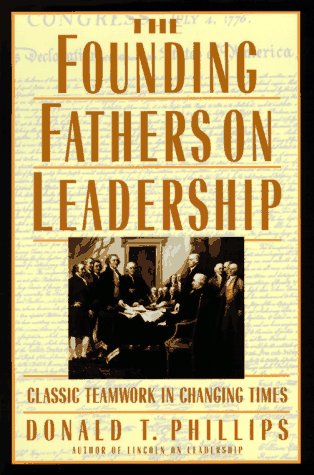
The Founding Fathers on Leadership: Classic Teamwork in Changing Times
Most leaders look for new ideas.
This book looks backwards. And finds something most people miss.
Because when you study the Founding Fathers—not as historical figures, but as leaders working together under pressure—you see something very relevant:
Leadership is not about one strong individual.
It’s about a group of strong individuals figuring out how to move forward together.
That’s the real lesson here.
Leadership in a Room Full of Strong Opinions
The Founding Fathers were not aligned by default.
Different backgrounds. Different interests. Different visions for the country.
And yet, they had to build something together.
That’s leadership.
Not in theory. In practice.
I’ve seen leadership teams struggle with far less complexity. People talk about alignment, but when real disagreement shows up, things stall. Egos get involved. Positions harden.
The Founding Fathers didn’t have that option.
They had to work through it.
So the question becomes: how do you lead when everyone at the table is strong, capable, and convinced they’re right?
Debate Is Not the Problem
One of the most useful takeaways from this book is how conflict was handled.
There was disagreement. A lot of it.
But it was productive.
Ideas were debated. Positions were challenged. Assumptions were tested.
That’s not dysfunction.
That’s progress.
Too many leaders try to avoid conflict. They smooth things over too quickly. They rush to reach a consensus before completing their thought process.
That weakens decisions.
Strong teams can handle tension.
The key is keeping it focused on the issue—not the person.
Compromise Without Losing the Mission
The Founding Fathers compromised.
But they didn’t compromise on everything.
That distinction matters.
They adjusted positions. They negotiated details. They found middle ground where necessary.
But they stayed anchored to the larger goal—creating a stable, functioning nation.
I’ve seen leaders get this wrong in both directions. Either they refuse to compromise at all, or they compromise so much that the original purpose gets diluted.
Neither works.
Strong leadership knows where to flex—and where to hold.
Trust Built Through Action
Trust wasn’t assumed in that room.
It was built.
Through behavior. Through consistency. Through showing up and doing the work.
That’s still true today.
You don’t build trust with statements. You build it with actions people can observe and rely on.
And once it’s there, everything moves faster.
Without it, everything slows down.
Clarity of Purpose Drives Alignment
Despite their differences, the Founding Fathers had one unifying force:
Purpose.
They knew what they were trying to build.
That clarity allowed them to work through disagreements without losing direction.
In business, this is often where things break down.
Teams get busy. Projects move. But the underlying purpose isn’t clear—or isn’t consistently reinforced.
When that happens, alignment fades.
And effort gets scattered.
So ask yourself: is your team aligned around a clear purpose—or just operating?
Leadership Is Shared
This book also challenges a common assumption.
Leadership doesn’t always sit in one place.
The Founding Fathers led in different ways, at different times. Washington, Jefferson, Adams, Franklin—each brought something unique.
That’s a strength.
When leadership is shared effectively, you get better thinking. Better decisions. Stronger outcomes.
But it requires humility.
And trust.
Not every leader is comfortable with that.
Managing Ego and Ambition
Let’s be clear—these were ambitious men.
Strong opinions. Strong personalities.
That creates risk.
Ego can derail progress quickly.
What stands out is that, despite that risk, they found ways to move forward. Not perfectly. Not without friction. But with enough discipline to keep the mission intact.
That’s a lesson worth paying attention to.
Because ego still shows up in leadership rooms today.
The difference is how it’s managed.
What This Book Is Really Saying
This isn’t just a history lesson.
It’s a leadership reality check.
The patterns are clear:
-
Strong teams include strong opinions
-
Productive conflict leads to better decisions
-
Compromise must be anchored in purpose
-
Trust is built through consistent action
-
Clarity aligns effort
-
Leadership can—and should—be shared
None of this is easy.
But it’s necessary if you’re building something that matters.
Reflection Questions
-
How does your team handle disagreement?
-
Are you avoiding conflict that needs to happen?
-
Where are you compromising too much—or not enough?
-
Is your team clear on the mission?
-
How strong is the trust within your leadership group?
-
Are you willing to share leadership when it makes sense?
-
How is ego showing up in your decision-making?
These questions get to the core.
Final Thought
The Founding Fathers didn’t lead in simple conditions.
They led in uncertainty, disagreement, and high stakes.
And they built something that lasted.
Not because they avoided tension.
But because they worked through it with purpose, discipline, and a shared commitment to the outcome.
That’s the standard.
And it still applies.
About the Author
Donald T. Phillips is known for examining historical figures and extracting practical leadership lessons for modern use. In The Founding Fathers on Leadership, he studies the collaborative leadership of America’s founders, focusing on how they navigated conflict, built trust, and aligned around a shared mission.