
The Four Obsessions of An Extraordinary Executive
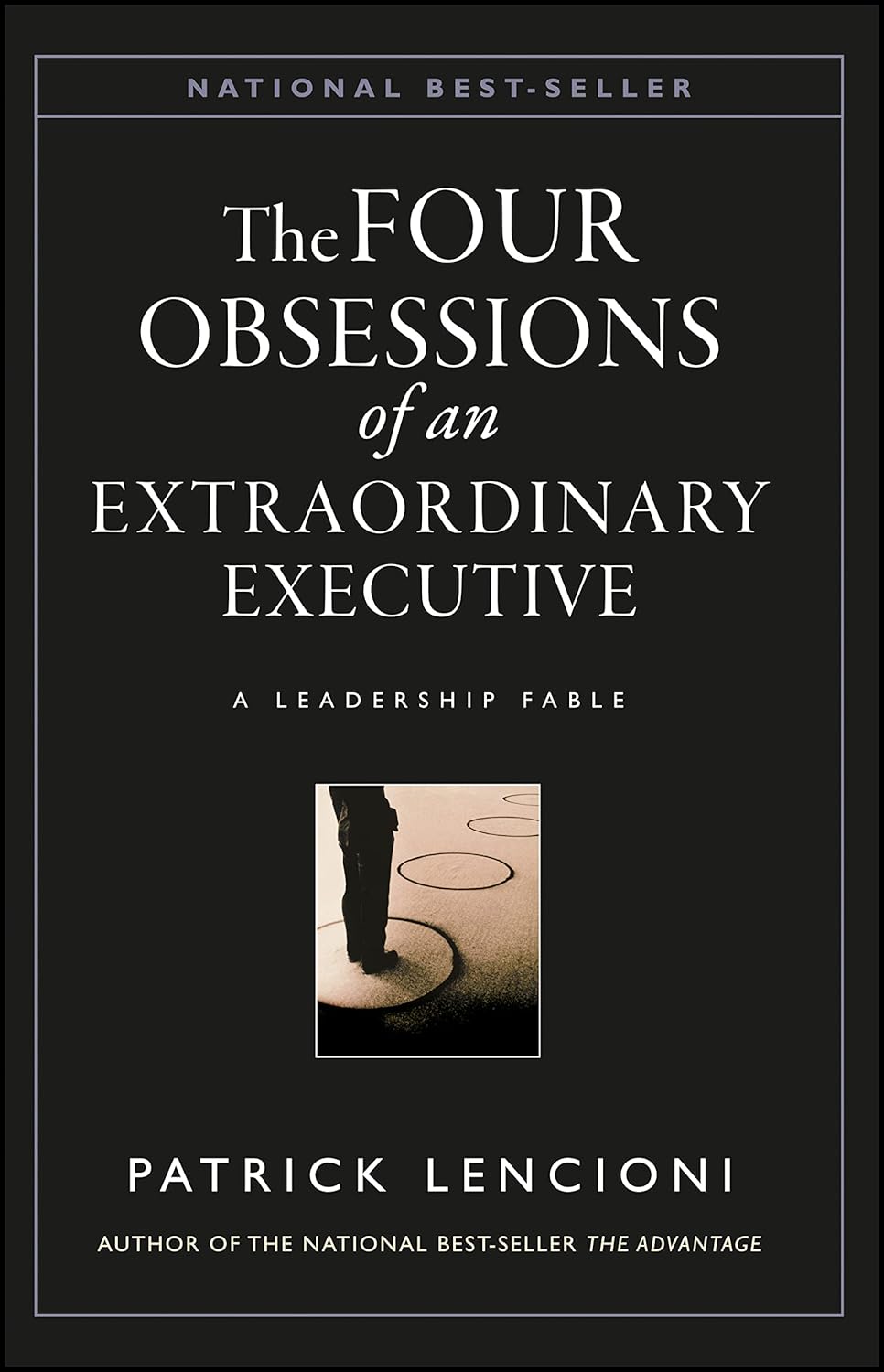
The Four Obsessions of an Extraordinary Executive
This is a short book that doesn’t try to impress you with theory. It tries to correct behavior. And it does it by forcing a simple question: why do so many leaders complicate what is already clear?
I’ve seen this play out for years. Smart leaders. Good intentions. But they drift. They lose focus on the few things that actually drive results. Lencioni brings it back to four disciplines. Simple. Not easy.
The Four Obsessions
1. Build and Maintain a Cohesive Leadership Team
This is where everything starts. Not strategy. Not vision. Team.
Lencioni is blunt here—if your leadership team isn’t aligned, nothing else works. Silos form. Politics creep in. Decisions stall or get undermined.
A cohesive team is built on:
- Trust (real trust, not polite agreement)
- Productive conflict (debate without fear)
- Commitment (clear decisions, no ambiguity)
- Accountability (peers holding peers accountable)
- Focus on results (team success over individual wins)
Most leaders avoid the hard conversations required to build this. They value harmony over truth. That’s a mistake.
“If we could get all our people rowing in the same direction, we could dominate any industry.”
That’s not theory. It’s an operational reality.
Question: Are your leaders truly aligned—or just professionally polite?
2. Create Organizational Clarity
Confusion kills execution. Every time.
Lencioni pushes leaders to answer six simple questions:
- Why do we exist?
- How do we behave?
- What do we do?
- How will we succeed?
- What is most important right now?
- Who must do what?
Simple questions. Rarely answered well.
I’ve watched companies spend months refining strategy decks while their people can’t answer what matters this quarter. That gap is expensive.
Clarity is not complexity. It’s discipline.
And once you have it, you repeat it. Over and over.
Question: Can everyone in your organization clearly explain your top priority right now?
3. Overcommunicate Organizational Clarity
Leaders always think they’ve said it enough.
They haven’t.
People need to hear the same message multiple times, in multiple ways, before it sticks. Lencioni calls this out directly—leaders must embrace repetition. Relentlessly.
Meetings. One-on-ones. Emails. Town halls. It all matters.
If you’re tired of saying it, your team might just be starting to hear it.
This is where many leaders fail. Not in thinking—but in reinforcing.
Question: What message have you stopped repeating because you’re tired of hearing yourself say it?
4. Reinforce Clarity Through Human Systems
Culture is not what you say. It’s what you reward and tolerate.
Lencioni makes this practical. Your systems must reflect your clarity:
- Hiring
- Performance management
- Compensation
- Recognition
- Termination decisions
If your values say one thing but your promotions say another, your culture is already defined.
People watch behavior. Not statements.
This is where leadership becomes real. And uncomfortable.
Question: What behaviors are you rewarding that contradict what you say matters?
The Discipline Behind the Simplicity
What makes this book powerful is not originality. It’s clarity.
These ideas are not new. But they are rarely executed with consistency.
That’s the gap.
Lencioni doesn’t give you more to do. He strips things away. He forces focus. He demands repetition. He calls out avoidance.
It’s leadership at its core.
No hiding.
Practical Takeaways
- If your team isn’t aligned, fix that first. Nothing else matters yet.
- Write down your answers to the six clarity questions. Then simplify them.
- Repeat your message until you’re tired of it. Then keep going.
- Audit your systems. Make sure they reflect what you say you value.
Execution is not a mystery. It’s discipline.
Reflection Questions
- Where is your leadership team avoiding real conflict?
- What decision has been “discussed” but not truly committed to?
- If I asked five employees your top priority, would I get one answer—or five?
- What message have you assumed people understand that they don’t?
- Where are your systems rewarding the wrong behavior?
- What are you tolerating that’s costing you credibility?
- If you simplified your strategy to one focus, what would it be?
Media & Related Content
Patrick Lencioni has expanded these ideas across several books:
- The Five Dysfunctions of a Team — a deeper dive into leadership team cohesion. Practical and widely used.
- The Advantage — expands on organizational health and clarity. More comprehensive, it builds directly on this book.
He also delivers keynote talks and interviews that reinforce these same themes. Consistent message. No fluff.
About the Author
Patrick Lencioni is a leadership consultant and founder of The Table Group. He’s spent decades working directly with executive teams across industries. His work stands out because it’s grounded in real-world application, not theory. He writes simply. He coaches directly. And he focuses on behavior over abstraction.