
Manuscript Found in Accra
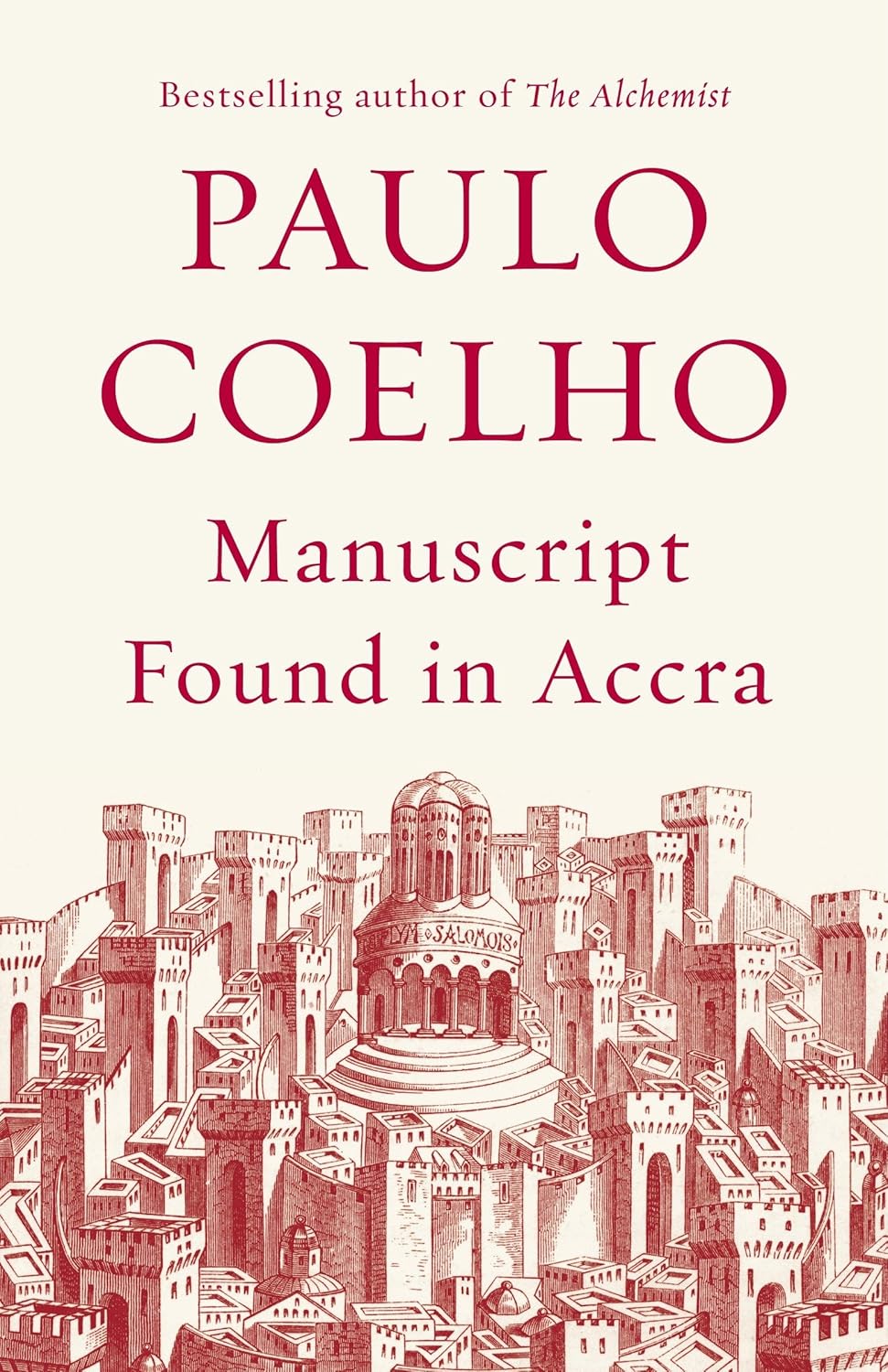
Manuscript Found in Accra — Paulo Coelho
You don’t read this book for plot. You read it for perspective.
Paulo Coelho sets the scene in Jerusalem, 1099, on the brink of invasion. A man named Copt gathers people and answers their deepest questions—about fear, loss, love, success, and failure. What you get isn’t a story. It’s a series of reflections that feel almost timeless. Like they’ve been waiting for you.
This is a book about how to stand steady when life isn’t.
The Core Ideas That Matter
1. Life Moves in Cycles — Nothing Stays Fixed
One of the quiet truths running through the book is this: nothing you’re experiencing is permanent.
Wins pass. Losses pass. Everything moves.
Most people get trapped because they treat a moment like a definition. A bad quarter becomes “I’m failing.” A win becomes “I’ve arrived.” Both are wrong.
This is the correction: you’re in motion, not a fixed state.
If you really believed that, how would you handle your current situation differently?
2. Adversity Reveals Who You Are
Coelho doesn’t romanticize struggle. But he does respect it.
You don’t discover strength when things are easy. You discover it when something you care about is at risk—or gone.
That’s where people either collapse or grow.
I’ve seen this with leaders over and over. The setback becomes the turning point. Not because it’s pleasant. Because it’s honest.
The question isn’t “Why is this happening?”
It’s “What is this revealing about me?”
3. Stop Trying to Be Useful. Be Real.
This one catches people off guard.
We spend a lot of time trying to prove value—to be useful, productive, needed. Coelho flips that idea. He argues that real usefulness comes from authenticity.
Not performance. Not image. Authenticity.
When you’re real, people trust you. When people trust you, you become useful in a way that actually matters.
Are you operating from who you are—or who you think you need to be?
4. Love Is Not a Transaction
There’s a line of thinking here that cuts deeper than it looks: love is not an exchange.
It’s not “I give, you give.” That’s negotiation.
Love is commitment without guarantee. It’s belief without proof. That applies to relationships—and to your work.
If you only show up when there’s a return, you’ll quit early.
If you show up because it matters, you’ll stay long enough to build something real.
5. Success Is Quiet
Most people measure success externally—recognition, status, outcomes.
Coelho takes a different angle: success is the peace you feel at the end of the day.
That’s it.
Did you act with integrity? Did you do your work well? Did you stay aligned with who you are?
If yes, that’s success.
Everything else is noise.
6. Relationships Are the Foundation
There’s no escaping this: who you surround yourself with shapes everything.
Coelho is direct about it—find people who believe in you and what you’re doing. Stay close to them. Distance yourself from those who drain or doubt.
This isn’t harsh. It’s practical.
You don’t build anything meaningful alone. And you don’t build it with the wrong people.
7. Generosity Works Both Ways
Most people are comfortable giving. Fewer are comfortable receiving.
Coelho makes the point that letting someone help you is also an act of generosity. It allows them to contribute, to matter.
That’s a leadership lesson most people miss.
If you never let others support you, you limit the relationship.
A Few Lines Worth Sitting With
“There are no permanent winners or losers in life.”
“Losing a battle does not mean you are defeated.”
“Success is not judged by others, but by the peace within you.”
Short. Direct. Hard to ignore.
Where This Shows Up in Real Life
This isn’t theory. It plays out every day:
-
A business setback that forces better thinking
-
A relationship that tests your patience and commitment
-
A moment where you choose authenticity over approval
-
A decision where integrity costs you something
These are the moments that define you.
Not the easy ones.
Reflection Questions
Take a minute with these. Don’t rush them.
-
Where in your life are you treating a temporary situation like it’s permanent?
-
What recent challenge revealed something about you—good or bad?
-
Are you trying to be impressive, or are you being real?
-
Where are you expecting something in return instead of simply committing?
-
At the end of your day, do you feel peace—or just exhaustion? Why?
-
Who in your life strengthens you—and who consistently drains you?
-
Where do you need to let someone help you?
Author: Paulo Coelho
Paulo Coelho is one of the most widely read authors in the world, best known for The Alchemist. His work blends spirituality, philosophy, and storytelling in a way that’s accessible but not shallow.
He’s not writing for academics. He’s writing for people trying to make sense of their lives.
And he’s done that for decades.