
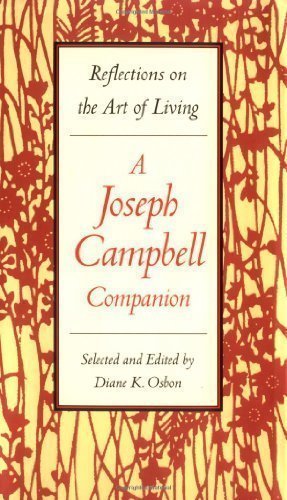
Reflections on the Art of Living: A Joseph Campbell Companion
Introduction
“Reflections on the Art of Living: A Joseph Campbell Companion” is a profound and illuminating journey through the landscape of human existence. Campbell, renowned for his work in comparative mythology, offers readers a rich tapestry of insights drawn from world mythologies, psychology, and philosophy. This book is not merely an academic exercise; it’s a practical guide to living a more meaningful and fulfilling life.
Campbell’s work is characterized by its ability to bridge the gap between ancient wisdom and contemporary challenges. As he famously states, “The privilege of a lifetime is being who you are.” This sentiment serves as a cornerstone of his philosophy, encouraging readers to embark on a journey of self-discovery and authentic living.
The book challenges conventional thinking about life’s purpose and meaning. Campbell asserts, “We must be willing to let go of the life we planned so as to have the life that is waiting for us.” This perspective invites readers to view life not as a predetermined path but as an ever-unfolding adventure filled with opportunities for growth and transformation.
Campbell’s approach is both profound and practical. He encourages readers to see the mythic dimensions of their own lives, stating, “Myths are public dreams; dreams are private myths.” This interconnection between personal experience and universal themes is a recurring motif throughout the book, offering readers a framework for understanding their own life journeys in a broader, more meaningful context.
Key Insights
The Hero’s Journey is Universal
At the heart of Campbell’s philosophy is the concept of the hero’s journey—a universal pattern that underlies all human experience. This journey, which Campbell describes as a cyclical process of departure, initiation, and return, is a metaphor for the challenges, transformations, and growth that we all undergo in life.
- The Call to Adventure: Campbell explains that the hero’s journey always begins with a call to adventure. This call can take many forms, such as a desire for change, an inner prompting to pursue a dream, or an external event that forces us out of our comfort zones. “The hero’s journey always begins with the call,” Campbell writes. “One way or another, a guide must come to say, ‘Look, you’re in Sleepy Land. Wake. Come on a trip. There is a whole aspect of your consciousness, your being, that’s not being touched…’”
- Facing Challenges: Once the journey begins, the hero faces a series of challenges and trials that test their resolve, strength, and wisdom. These challenges are not just obstacles but opportunities for growth. Campbell famously said, “The cave you fear to enter holds the treasure you seek.” This means that the fears and doubts we encounter are gateways to deeper understanding and personal transformation. The hero’s journey teaches us that it is through facing our fears and embracing the unknown that we discover our true potential.
- Transformation and Return: After overcoming the trials, the hero undergoes a transformation, gaining new insights, wisdom, and strength. The final stage of the journey is the return, where the hero brings back the knowledge and gifts they have gained to benefit their community. This return is crucial, as it represents the hero’s integration of their experiences into their everyday life, enabling them to live with greater purpose and understanding.
For anyone embarking on a new chapter in life—whether it’s pursuing a passion, making a significant change, or facing personal challenges—Campbell’s framework provides a powerful lens through which to view your journey. The hero’s journey is not just about achieving external success; it’s about the internal growth that comes from embracing challenges, learning from them, and using that knowledge to enrich your life and the lives of others.
Commitment as a Pathway to Fulfillment
Commitment, according to Campbell, is a vital component of a fulfilling life. He suggests that every commitment, whether in relationships, career, or personal endeavors, narrows our path but also deepens our experience.
- The Power of Focus: Campbell asserts that commitment involves focusing your energy and attention on a specific path or goal. This narrowing of focus is not a limitation but rather a means of deepening your engagement with what truly matters. “Every commitment is narrowing,” he explains. By committing to something, you are choosing to invest your time, energy, and resources into it, which in turn allows you to develop expertise, build deeper connections, and achieve meaningful success.
- The Role of Resilience: Commitment also requires resilience, especially when faced with setbacks or failures. Campbell emphasizes that setbacks are not to be feared but are opportunities for growth. “Any disaster you can survive is an improvement to your character, your stature, and your life,” he notes. When a commitment falters or challenges arise, it’s essential to return to your “large base”—your core values and beliefs—and find the strength to recommit. This process of recommitting after setbacks builds character and deepens your sense of purpose.
- Finding Fulfillment Through Dedication: True fulfillment comes from the dedication you bring to your commitments. Whether it’s a relationship, a career, or a personal project, the act of committing fully—despite the challenges and sacrifices—leads to a deeper sense of satisfaction and meaning. Campbell’s teachings remind us that fulfillment is not just about achieving external goals; it’s about the inner rewards that come from staying true to your path and persevering through difficulties.
The Role of Love and Relationships
Campbell’s exploration of love is one of the most profound aspects of his work. He views love not just as a romantic ideal but as a powerful force that connects us to others and to the greater whole.
- Different Levels of Love: Campbell describes different levels of love, from the basic love of servant to master to the highest form—unconditional, all-encompassing love. At its core, love is a sacred bond that requires responsibility, maturity, and selflessness. “Love without a sense of responsibility is not love,” Campbell asserts. This means that true love is not just about passion or desire; it’s about a deep sense of care and responsibility for the well-being of the other person.
- The Sacredness of Relationships: Relationships, in Campbell’s view, are sacred bonds that require effort, attention, and a willingness to grow together. He famously said, “Marriage is not a love affair; it’s an ordeal. It is a religious exercise, a sacrament.” This perspective challenges us to approach our relationships with a sense of reverence and responsibility. Whether it’s a romantic relationship, a friendship, or a partnership, true connection requires mutual respect, open communication, and a shared commitment to growth.
- Growing Together Through Challenges: Campbell’s teachings also emphasize the importance of navigating challenges together in a relationship. Just as the hero’s journey involves trials and tribulations, so too do relationships. It’s through these challenges that relationships deepen and grow. By approaching difficulties with a sense of responsibility and care, we can strengthen our bonds and build lasting, meaningful connections.
The Importance of Finding Your Center
Amidst the chaos of life, Campbell advises us to find our center—a sacred space where we can reconnect with our true selves. This space allows us to step away from the distractions of the world and find peace within.
- Creating Sacred Space: Campbell explains that the first step in finding your center is detachment or withdrawal from the external world. “The first step, detachment or withdrawal, consists in a radical transfer of emphasis from the external to the internal world,” he notes. This detachment is not about escapism; it’s about creating a balance between action and contemplation. In a world filled with constant noise and demands, finding your center requires carving out time for reflection, meditation, or simply being still.
- The Power of Inner Harmony: Finding your center is essential for maintaining inner harmony and balance. Without a strong inner foundation, external achievements can feel hollow. Campbell’s emphasis on finding your center reminds us that success is not just about achieving external goals; it’s about living in alignment with your core values and purpose. “What counts is being where you feel you’re in your place,” Campbell advises. This sense of being “in your place” comes from living in harmony with your true self, rather than being swayed by external pressures or societal expectations.
- Reconnecting with Your True Self: Regularly reconnecting with your core values and purpose allows you to stay grounded and focused. This practice helps you navigate life’s challenges with clarity and confidence, ensuring that your actions are aligned with your deeper sense of self. By finding your center, you can approach life with greater calm, resilience, and a sense of purpose.
Embracing Imperfection
One of Campbell’s most empowering messages is the idea that perfection is an illusion and that embracing our imperfections is essential for personal growth.
- The Illusion of Perfection: In a culture that often glorifies perfection, Campbell’s teachings offer a refreshing perspective. He reminds us that perfection is not only unattainable but also unnecessary. “Decide to be imperfect, reconcile yourself to that, and go ahead,” he advises. This acceptance of imperfection allows us to move forward without being paralyzed by the fear of failure. It’s in our imperfections that we find our humanity, our creativity, and our ability to connect with others.
- The Growth in Imperfection: Campbell encourages us to view mistakes not as failures but as opportunities for growth. “That’s ‘joyful participation in the sorrows of the world,’” he notes, suggesting that embracing our imperfections is part of fully engaging with life. When we let go of the need to be perfect, we open ourselves up to deeper, more meaningful experiences. By accepting our imperfections and learning from our mistakes, we become more resilient, adaptable, and ultimately more fulfilled.
- Embracing the Journey: Campbell’s message is clear: life is not about achieving a state of perfection but about embracing the journey, with all its flaws, challenges, and opportunities for growth. “It’s strange: the less there is of you, the more you experience the sublime,” he muses. This means that by letting go of ego and the need for perfection, we can experience life more fully and meaningfully.
Major Takeaways
- Life as an Adventure: Campbell consistently encourages viewing life as an adventure rather than a problem to be solved. He states, “The big question is whether you are going to be able to say a hearty yes to your adventure.” This mindset can transform how one approaches both challenges and opportunities. Campbell elaborates, “When you follow your bliss… doors will open where you would not have thought there would be doors, and where there wouldn’t be a door for anyone else.” This perspective invites a sense of wonder and openness to life’s experiences.
- The Importance of Ritual: In our modern, often secular world, Campbell argues for the creation of personal rituals to connect with something greater than ourselves. He notes, “Your sacred space is where you can find yourself again and again.” These rituals don’t have to be religious in nature. Campbell explains, “What matters is that you create a space where you can separate yourself from the world around you and enter into a personal dialogue with yourself.” This emphasizes the importance of creating practices that foster self-reflection and spiritual growth.
- Transcending Duality: A significant portion of Campbell’s work focuses on moving beyond binary thinking. He writes, “Life is without meaning. You bring the meaning to it.” This perspective encourages readers to create their own meaning rather than searching for it in predefined categories. Campbell further states, “God is a metaphor for that which transcends all levels of intellectual thought. It’s as simple as that.” This invites a more nuanced, personal understanding of spirituality and meaning.
- The Role of Art: Campbell views art as a gateway to deeper truths about ourselves and the world. He asserts, “The goal of life is rapture. Art is the way we experience it.” This elevates art from mere entertainment to a vital aspect of human experience and growth. Campbell elaborates, “The function of the artist is the mythologization of the environment and the world.” This perspective invites readers to engage with art as a means of exploring and expressing the human experience.
- Personal Responsibility: Throughout the book, Campbell emphasizes the importance of taking responsibility for one’s life and choices. He states, “Your life is the fruit of your own doing. You have no one to blame but yourself.” This might seem harsh, but Campbell sees it as empowering. He explains, “When you make the sacrifice in marriage, you’re sacrificing not to each other but to unity in a relationship.” This perspective applies not just to relationships but to all aspects of life, encouraging readers to be the heroes of their own stories rather than victims of circumstance.
Practical Applications
- Create Personal Rituals: Campbell advises creating meaningful personal practices. This could involve setting aside time each day for meditation, journaling, or any activity that fosters self-reflection and connection to something larger than oneself. He suggests, “Find a place inside where there’s joy, and the joy will burn out the pain.” This inner sanctuary, cultivated through personal rituals, can serve as a source of strength and renewal.
- Embrace Challenges: When facing difficulties, remember Campbell’s words: “Where you stumble, there lies your treasure.” This reframes challenges as opportunities for growth and self-discovery. Practice viewing obstacles through the lens of the hero’s journey. Ask yourself, “What can I learn from this? How might this challenge be calling me to grow?”
- Follow Your Bliss: Campbell encourages, “Follow your bliss and the universe will open doors where there were only walls.” This isn’t about pursuing fleeting pleasures but about aligning with one’s true purpose. Take time to reflect on what truly brings you joy and fulfillment. Are there ways you can incorporate more of these elements into your daily life? Remember, as Campbell says, “If you do follow your bliss, you put yourself on a kind of track that has been there all the while, waiting for you.”
- Study Myths: Campbell states, “Myth is much more important and true than history.” Explore myths from various cultures, looking for universal themes and personal resonances. Consider keeping a “myth journal” where you reflect on how mythological themes play out in your own life. As Campbell notes, “Myths are public dreams, dreams are private myths.” This practice can provide new perspectives on personal experiences and societal issues.
- Practice Mindfulness: Campbell notes, “The inner world is the world of your requirements and your energies and your structure and your possibilities that meet the outer world.” This supports the practice of mindfulness in expanding awareness. Incorporate mindfulness techniques into your daily routine. This could be as simple as taking a few mindful breaths before starting a task or practicing mindful walking as you go about your day.
Reflective Questions
As you contemplate the insights from Campbell’s Reflections on the Art of Living, consider these questions to deepen your understanding and apply his wisdom to your own life:
- What is your current “hero’s journey”? What challenges are you facing that could lead to personal growth if embraced fully?
- Have you ever experienced a “call to adventure” in your life? How did you respond, and what did you learn from the experience?
- In what areas of your life are you most committed? How has this commitment shaped your journey and your sense of fulfillment?
- How do you handle setbacks and failures? Do you see them as obstacles or opportunities for growth?
- What relationships in your life require a greater sense of responsibility and care? How can you deepen these connections?
- Do you have a sacred space or practice that helps you reconnect with your true self? How can you create more time for reflection and inner peace?
- How do you balance external achievements with inner fulfillment? Are your actions aligned with your core values and purpose?
- What are your greatest imperfections? How can you embrace them as part of your journey rather than trying to eliminate them?
- How does the idea of “joyful participation in the sorrows of the world” resonate with you? How can you apply this concept to your daily life?
- What steps can you take today to begin or continue your hero’s journey with greater courage, resilience, and self-compassion?
Conclusion
Joseph Campbell’s Reflections on the Art of Living offers profound insights into the human experience, blending ancient wisdom with practical advice for modern life. By embracing the hero’s journey, committing to our paths, cultivating responsible relationships, finding our center, and accepting our imperfections, we can lead lives of greater meaning and fulfillment. These lessons are not just theoretical—they are actionable steps that can transform the way we approach our work and our lives.
As you navigate the challenges and opportunities of your own journey, remember that life is not a straight path but a winding road filled with twists, turns, and unexpected detours. Campbell’s teachings remind us that these detours are not distractions but essential parts of our journey. They help us grow, learn, and ultimately find our way back to our true selves.
In Campbell’s words, “The goal of life is rapture. Art is the way we experience it.” Life itself is an art form, and how we live it is our greatest masterpiece. By embracing the wisdom of Campbell’s teachings, you can create a life that is not only successful but also deeply fulfilling. You can lead with courage, love with responsibility, and live with a sense of purpose and joy.
As you continue on your path, may you find the strength to answer the call to adventure, the resilience to overcome setbacks, the wisdom to nurture meaningful relationships, the clarity to find your center, and the grace to embrace your imperfections. In doing so, you will not only achieve success in your personal endeavors but also experience the profound fulfillment that comes from living a life that is true to who you are.
And as you journey forward, remember Campbell’s enduring words: “Participate joyfully in the sorrows of the world.” It’s a call to engage fully with life, to embrace both the joy and the pain, and to find meaning and purpose in every moment. In doing so, we not only fulfill our own potential but also contribute to the greater good, inspiring others to embark on their own hero’s journey.
