
Introduction
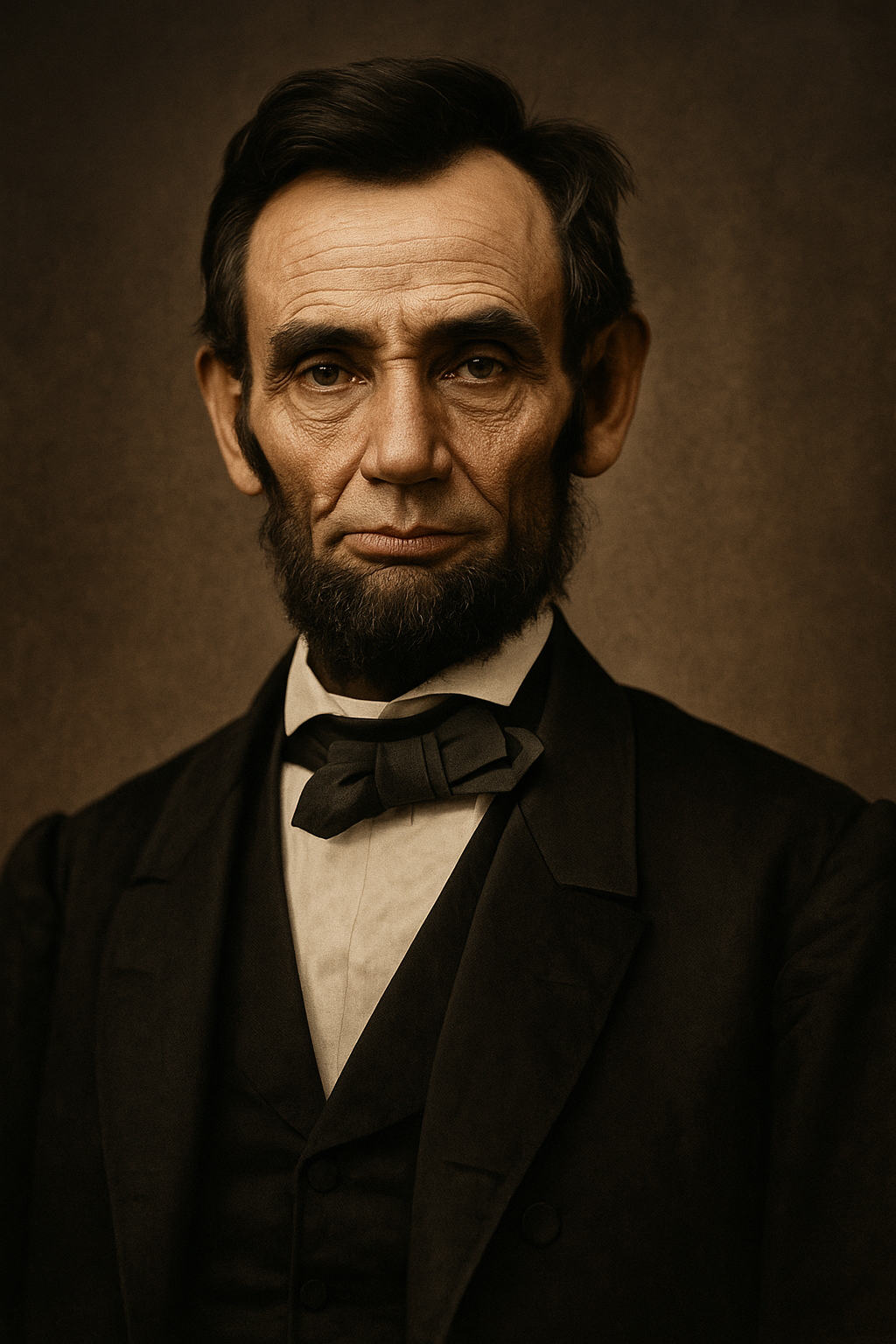
What can modern leaders learn from Abraham Lincoln? I thought that Memorial Day was a fitting time to write this blog based on a fictional conversation. More than a century after his death, Lincoln’s approach to leadership continues to inspire. This imagined late-night conversation explores the enduring wisdom of a man who led America through its darkest hours. His reflections on humility, conscience, criticism, perseverance, and power form a blueprint for leaders of all kinds.
The Setting
It was past midnight in Springfield. The square below was hushed, the flicker of gas lamps casting long shadows across the cobbled street. Inside his law office, the air was thick with the scent of ink, oil, and time. Volumes of Blackstone, dusty congressional records, and maps of fractured states lined the walls. The soft creak of a rocking chair and the silhouette of a tall, gaunt man framed in lamplight spoke of a night not spent in rest, but in reflection.
Lincoln stood as I entered. His vest was unbuttoned, sleeves rolled past the elbows, and his eyes—tired, but keen—met mine with a firm handshake. He gestured to a worn leather chair opposite him.
Me: Mr. President, thank you for receiving me at such a late hour. I have questions not just about victory or office, but about what it means to lead when doubt, grief, and history weigh heavily.
Lincoln: (Smiling faintly.) Then you’ve come at the right time. The guard’s down, and truth doesn’t hide well in the dark. Ask what you will. I’ll answer from where the scars are.
I. The Burden of Leadership
On Stepping Forward Despite Doubt
Me: You weren’t born into greatness. Why accept the presidency when the country teetered on collapse?
Lincoln: Because sometimes a man doesn’t choose the moment—the moment chooses the man. I didn’t believe I was the best for the job. But the house was on fire, and I was close enough to pick up a bucket. Sometimes leadership is not about confidence. It’s about duty.
Let me tell you a little story. Back in New Salem, when I was still splitting rails and clerking at the store, a wagon tipped in the mud. The owner stood scratching his head. I didn’t ask who he voted for—I just helped lift. That’s leadership. You see a burden and shoulder it.
On Imposter Syndrome
Me: Did you ever feel the weight of being unworthy of the office?
Lincoln: Most days. I knew my limitations too well. I wasn’t born of wealth, lost more elections than I won, and doubted myself in the quiet hours. But humility steadies a man better than pride ever could. I remember a letter from a mother who sent all her sons to war. That night, I told myself, “I may not be enough, but I must be enough today.”
II. Power, Principle, and the Use of Conscience
On the Use of Power
Me: How did you keep power from corrupting you?
Lincoln: By fearing it. Power, like whiskey, reveals more than it builds. I watched myself more closely after I succeeded than when I failed. A leader must pass his decisions through the sieve of conscience before unleashing them on the world.
On Holding onto a Moral Compass
Me: How did you stay aligned with your values?
Lincoln: I listened before I led. I read Scripture, pondered the Constitution, and asked myself, “What would my sons say of this when I’m gone?” From silence came calm. And from calm, courage.
On the Role of Faith
Lincoln: (Quietly.) As the war dragged on, I leaned more heavily on the Almighty. I did not believe Providence favored either side. Only that it favored justice. My work was not to claim God, but to align with what was just.
III. Building Teams, Facing Conflict, and Keeping Civility
On Assembling a Cabinet of Critics
Me: You brought rivals into your cabinet—why not loyalists?
Lincoln: Because I didn’t need echoes. I needed arguments. Seward, Stanton, and Chase—they challenged me. Annoyed me too. But they made me sharper. If everyone agrees, someone isn’t thinking.
Lincoln: I once said, “If I make Chase Secretary of the Treasury, I know he wants my job. But if he helps win the war, I’ll take the help and deal with the ambition later.” We need the best minds, not just the kindest ones.
On Managing Dissent
Me: How did you deal with internal resistance?
Lincoln: I let men show themselves. Some tie their own noose, if you wait long enough. Others need only to be invited to purpose and proximity. I feared apathy more than criticism. Indifference is a slow poison
IV. Adversity, Compassion, and Resilience
On Grant and Other Generals
Me: What made you trust Grant after so many failed commanders?
Lincoln: He acted. He didn’t wait for fair weather. I didn’t care if he drank whisky, so long as he fought. When people questioned it, I said, “Send a case to the other generals.”
On Mercy to Deserters
Me: You often pardoned deserters. Why mercy over discipline?
Lincoln: Because war extracts enough. Most of them were scared, not traitors. Hanging them might uphold discipline, but it would kill the conscience of the nation. Mercy strengthens resolve when given rightly.
Lincoln: I remember one lad, no older than sixteen, sentenced to hang. He wrote me a letter, and it was clear he was just a young, scared boy. I reflected and thought, If Almighty God gives a man a cowardly pair of legs, how can he help their running away with him? I wrote the pardon myself and told Stanton, “I’d rather lose the war than send another mother’s boy to the grave when he still has his soul to mend.”
On Visiting the Front
Me: Why did you risk visiting the front lines and hospitals so often? You were an obvious target?
Lincoln: Because leadership should never become abstract. When I saw the boys I sent to die, it made my pen heavier. That’s a good thing.
On Grief and Leading Through It
Me: You lost a son during the war. How did you keep leading?
Lincoln: (Eyes soft.) I broke. I wandered the halls. I cried alone. I wrote letters I never sent. But I rose each morning. Willie’s death hollowed me—but in the hollow, I built steadier ground.
On Early Hardship Shaping Resolve
Me: Did your early life steel you?
Lincoln: Splitting rails, burying my mother, losing love—they taught me to keep going when everything says stop. Adversity is cruel, but it’s faithful. It hammers you into something stronger.
On Persevering Through Loss
Me: After so many defeats, how did you carry on?
Lincoln: I believed the cause was worth the cost. Some days I didn’t believe enough—so I borrowed belief from a soldier’s widow or a child’s letter. Hope whispers, “Try again tomorrow.”
V. Legacy, Hope, and Final Thoughts
On Regret and Redemption
Me: Anything you’d do differently?
Lincoln: I would’ve moved sooner on emancipation. I tried to please the border states for too long. And I would’ve spent more time with my boys. The country got my best—my family got what was left.
On Running a Nation at War
Me: How did you lead the nation and a war?
Lincoln: One hour at a time. I delegated, focused on first principles, and reminded myself: We couldn’t wait for peace to build a better union. We had to build while bleeding.
On How He Wanted to Be Remembered
Me: What did you want people to feel under your leadership?
Lincoln: Safe enough to speak. Seen enough to stay. Even when they disagreed. Especially then.
On Hope
Me: What gave you hope?
Lincoln: A note from a soldier. A prayer from a mother. The stubborn kindness of those who lost everything and still believed in the flag.
On What He’d Tell Modern Leaders
Me: What advice would you give leaders today?
Lincoln: Lead with humility. Govern with conscience. Tell the truth, even when it costs. And when uncertain—pause, listen, and remember the lives beneath your choices.
The Farewell
The lamp had burned low. Lincoln stood, hat in hand. The deep lines in his face were softened in the lamplight.
Lincoln: You asked with sincerity. I answered from my scars. I made mistakes, carried regrets. But I tried to lead not from certainty, but conscience.
Me: Thank you, Mr. Lincoln. For reminding us that strength doesn’t always roar. Sometimes, it walks quietly, bearing the weight of others.
Lincoln: (Nods.) And when the dark deepens, tell a good story. Then get back to the work. There’s still more Union to build.
He stepped into the hallway. The room grew dark. But something brighter remained.
A light born of conscience. Tempered in sorrow. Still burning.