
Career Paths Don’t Have to Be Complicated: Three Roads to Success
Why Most Employers Get It Wrong—and How You Can Get It Right
Over the years, working with numerous clients has revealed a persistent challenge: creating career paths that are clear, practical, and suitable for all types of employees. It’s not because they don’t care or aren’t trying. It’s because we tend to make things more complicated than they need to be.
When things go sideways—when performance drops or a good employee suddenly leaves—it’s often because we tried to force the issue. We took someone who was talented and well-intentioned and placed them in a role that didn’t fit. Maybe they were the right person but in the wrong seat. Or the wrong person, but somehow ended up in the right seat. Either way, the results don’t lie: misaligned paths lead to frustration, disengagement, and turnover.
We must stop treating career paths like puzzles that only a few people can solve. It’s not that mysterious. In fact, it’s pretty simple.
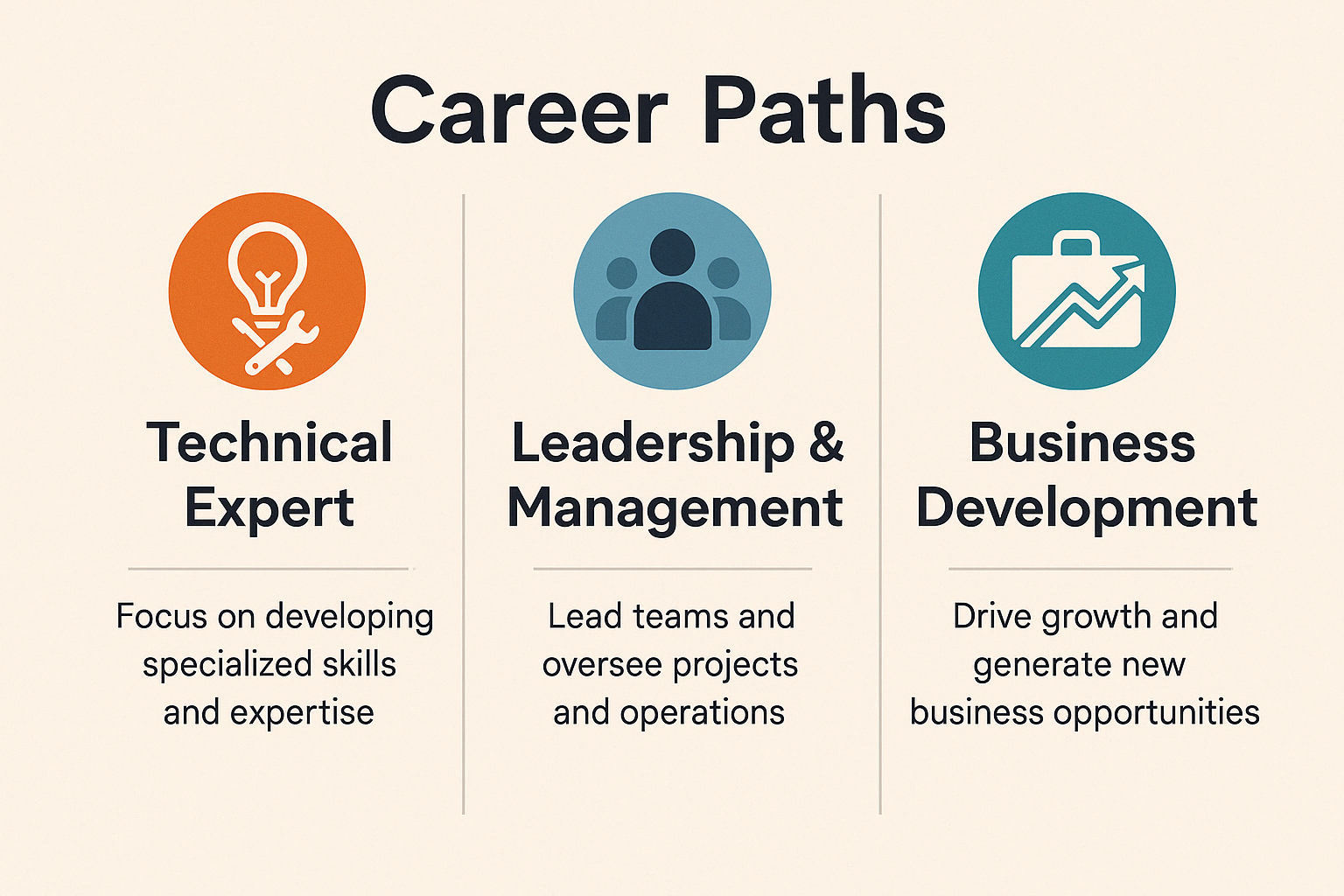
From what I’ve seen, every organization really only needs to offer three main career paths, and every employee fits best into one of them.
The 3 Career Paths Every Business Needs
-
The Technical Expert Path
This is for the person who wants to master their craft. They have no interest in managing others or advancing in a corporate hierarchy. They find fulfillment in being really good—maybe even world-class—at what they do.
These are your engineers, your craftspeople, your analysts, and your technicians. They see themselves as artisans. They thrive on sharpening their skills and solving complex challenges. They tend to be more introverted and prefer working independently or in small groups of like-minded experts.
What motivates them?
Pride in their work. Solving tough problems. Being recognized for their expertise. Being left alone to do excellent work.
Common mistake:
Pushing them into management roles just because they’ve been around a while or “deserve a promotion.” That’s not a promotion for them—it’s punishment.
Compensation Strategy:
This is the path where pay ceilings happen the fastest—if we let them. Technical people get better with time, but our compensation systems often stop rewarding them once they hit a certain seniority. That’s not just unfair—it’s a fast way to lose your best talent.
So get creative:
- Introduce expert-level pay tiers based on skill mastery, certifications, or internal impact.
- Offer project-based bonuses tied to performance, innovation, or quality metrics.
- Allow them to mentor others and pay for that value-add.
- Position them as internal consultants with cross-functional influence and income potential.
The key is to reward their growing value, not punish their loyalty with stagnation.
-
The Leadership and Management Path
These are your team builders. While they might not be your most technical people, they’re wired to think about the bigger picture. They care deeply about helping others succeed and love the challenge of leading a group toward a shared goal.
They get joy from coaching, mentoring, and solving people problems. They can handle responsibility and thrive in collaborative and accountable environments.
What motivates them?
Influence, progress, building something with others, and seeing their team win.
Common mistake:
Putting them in isolation or roles where they are solely responsible for output is a common mistake. They need people. They need purpose.
Compensation Strategy:
Leadership roles already come with built-in compensation bumps, but we still need to be intentional. The goal isn’t just more money for more responsibility; it’s building a comp plan that reflects outcomes.
Try this:
- Structure compensation with a base salary plus a performance bonus tied to team outcomes, not just individual results.
- Add incentives for retention, culture-building, or employee development milestones.
- Use profit-sharing or team-based bonuses to reward group success—this aligns leadership incentives with company health.
And most importantly, reward not just what they do, but how they grow others.
-
The Business Development Path
This is the most challenging path to fill—but when you find the right person, they’re gold. These are your relationship builders, connectors, and closers. They live to win. They’re not bogged down in the technical weeds or drawn to internal team dynamics. They want to create opportunities and beat the competition.
What motivates them?
Winning. Solving real-world problems. Building relationships. Making money. Earning recognition.
Common mistake:
Placing them in slow, process-heavy roles or surrounding them with bureaucracy is a common mistake. They need flexibility, clear targets, and the space to chase results.
Compensation Strategy:
This one is usually more straightforward but also carries a higher risk. That’s the nature of sales. So your comp plan needs to reflect that.
Some key principles:
- High upside, high accountability. A healthy commission plan rewards results—period.
- Add accelerators for exceeding targets to attract top talent.
- Structure some base pay for stability, especially in more technical or complex industries.
- Create long-term incentive programs tied to account retention, contract renewals, or multi-year deals.
Remember, not everyone is comfortable with variable compensation, but your top salespeople love it. They love it. It motivates them.
Expose Early. Experiment Often. Stay Flexible.
One important caveat: I highly recommend exposing new, fairly green hires to all three paths. In the early days, they’re still discovering what motivates them and where their natural energy flows. It’s valuable to let them sample different kinds of work to see what lights them up.
But if someone’s been with you a while? The path usually becomes obvious. You can see it in how they show up every day. Their behavior tells the story. You just have to pay attention and listen.
However, I’m also a big believer in career experiments. Sometimes, an employee thinks they want to try a different path—perhaps step into management or explore sales. I say, let them. But let them try it with support and a safety net in place. If it’s not for them, let them return to what they’re great at without shame or penalty.
Otherwise, you end up with the Peter Principle in full force: promoting people past the point of their competence—until they fail, lose confidence, and eventually leave. That’s a lose-lose.
Good people shouldn’t have to leave your company to find a role that fits them better. They should be able to explore, experiment, and grow right where they are.
And What About You?
As a leader, it’s worth asking yourself the same questions:
- Are you at your best when you’re solving technical problems and diving deep into the work?
- Do you feel alive when you’re coaching and empowering others?
- Or do you thrive when you’re out in the marketplace, chasing the next big opportunity?
Understanding your own wiring will help you become a better leader—and it’ll help you appreciate the different paths your people want to take. It will also assist you in comprehending the team you need to assemble around you and identifying any potential blind spots.
Final Thoughts: Align Path with Potential—and Pay Accordingly
When we stop forcing people into roles that don’t fit, everything changes. Engagement goes up. Retention improves. Performance accelerates.
But clarity alone isn’t enough. We have to back it up with compensation. If you claim to value all three paths equally, then demonstrate it in how you reward them. Don’t make the mistake of putting all the financial incentives in one bucket. If someone’s adding real value to the business—whether it’s through mastery, leadership, or sales—they deserve to see that reflected in their paycheck.
So if you’re serious about growth—for your people and your business—start having this conversation. Make it part of your onboarding, your coaching, your performance reviews, and your comp planning.
Because when people can see a future inside your company—and they know they’ll be rewarded for walking it—they’ll stay. And they’ll grow with you.
