
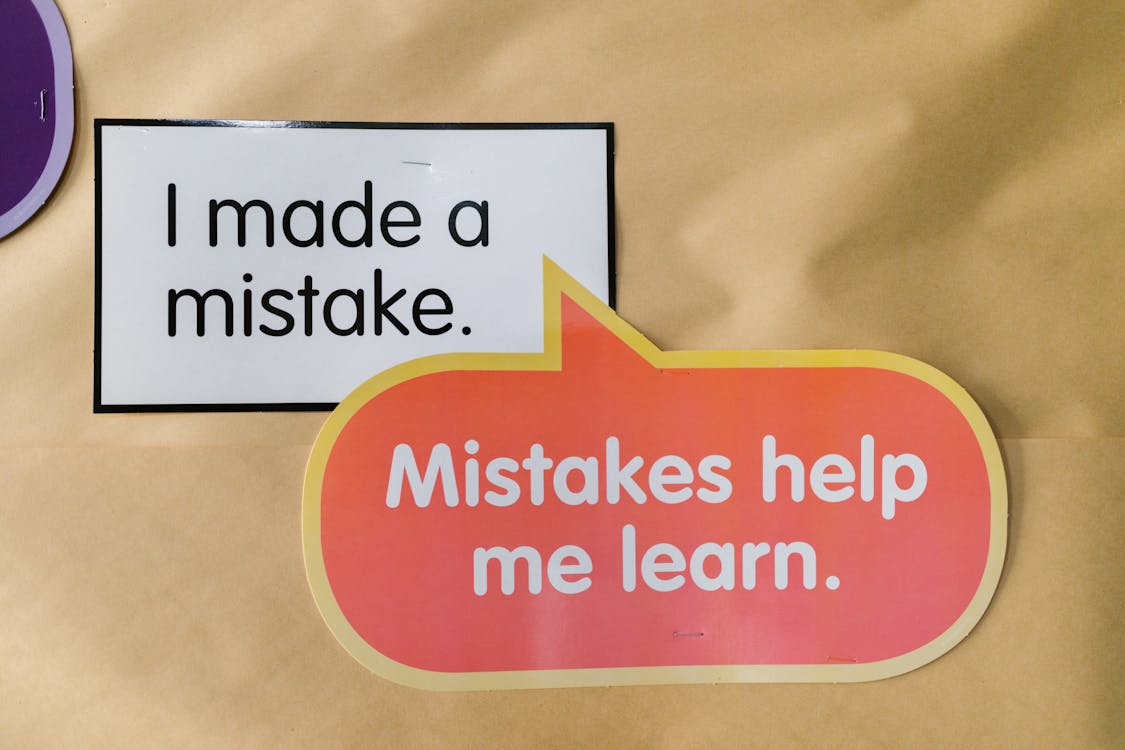
If you want to grow and challenge what’s possible, then you will need to get comfortable with mistakes.
Fear can be a destabilizing emotion in organizations. It limits risk-taking, inhibits action, and, worst of all, creates a “cover your a** (CYA)” mentality. This often results in countless hours of wasted energy. One of the biggest fears we all grapple with is the fear of being wrong or making mistakes. Far too many employees would rather do nothing or rigorously defend the status quo than go out on a limb and try something new or different. Due to these fears, most organizations remain in survival mode, as achieving success typically requires taking risks and challenging the existing business practices.
Leaders Must Address The Fear Factor
All good leaders understand that one of their primary jobs is to address this fear. They strive to create an environment where people push the envelope and take ownership of their work. Taking ownership means constantly looking for a better way to do things, even if this means failing at times.Actions To Encourage Positive Mistakes
I recommend the following actions for leaders who want to better leverage the benefits of making positive mistakes:- Be public about your expectation that mistakes will happen and that when this happens, the only requirement is that the organization learn from experience (and not repeat the mistake).
- When you, as the leader, make a mistake, you will openly acknowledge it and let your people know how you intend to be smarter the next time.
- Make debriefing mistakes a formal management philosophy within the organization that is fully supported by administrative processes and procedures.
- Publicly acknowledge and promote people within the organization who are reasonable risk takers.
- Reiterate that risk for the sake of risk is never a good thing; however, risks taken after careful consideration and in correct proportion to the potential upside/downside will be rewarded.
- Walk around and constantly ask your people what they are learning and what interesting mistakes they are making – trust me, it works.
- Create awards and acknowledgements for people who challenge the status quo, tackle tough challenges, and give them out even when they fail.
- Carefully screen your managers and supervisors to ensure they create a work environment that is safe and conducive to encouraging employee initiative.
Related articles
- Break Through Your Comfort Zone To The Success Zone (hoopsroundtable.com)
- “What If” Risks Led To Your Success…by Ozlem Yikici (aroundofwordsin80days.wordpress.com)
- Motivational Wednesdays: Taking Risks (craftbrainiac.typepad.com)
- Play Safe but Take a Risk, Make a Mistake.. (crazyicecube.wordpress.com)
- Why You Should Make Mistakes (themarlincompany.com)
- Fail Your Way to Success (inc.com)
- Freedom From Fear (living4bliss.wordpress.com)
- Risk it, I say! (madouthere.wordpress.com)