
The Truth About Employee Engagement
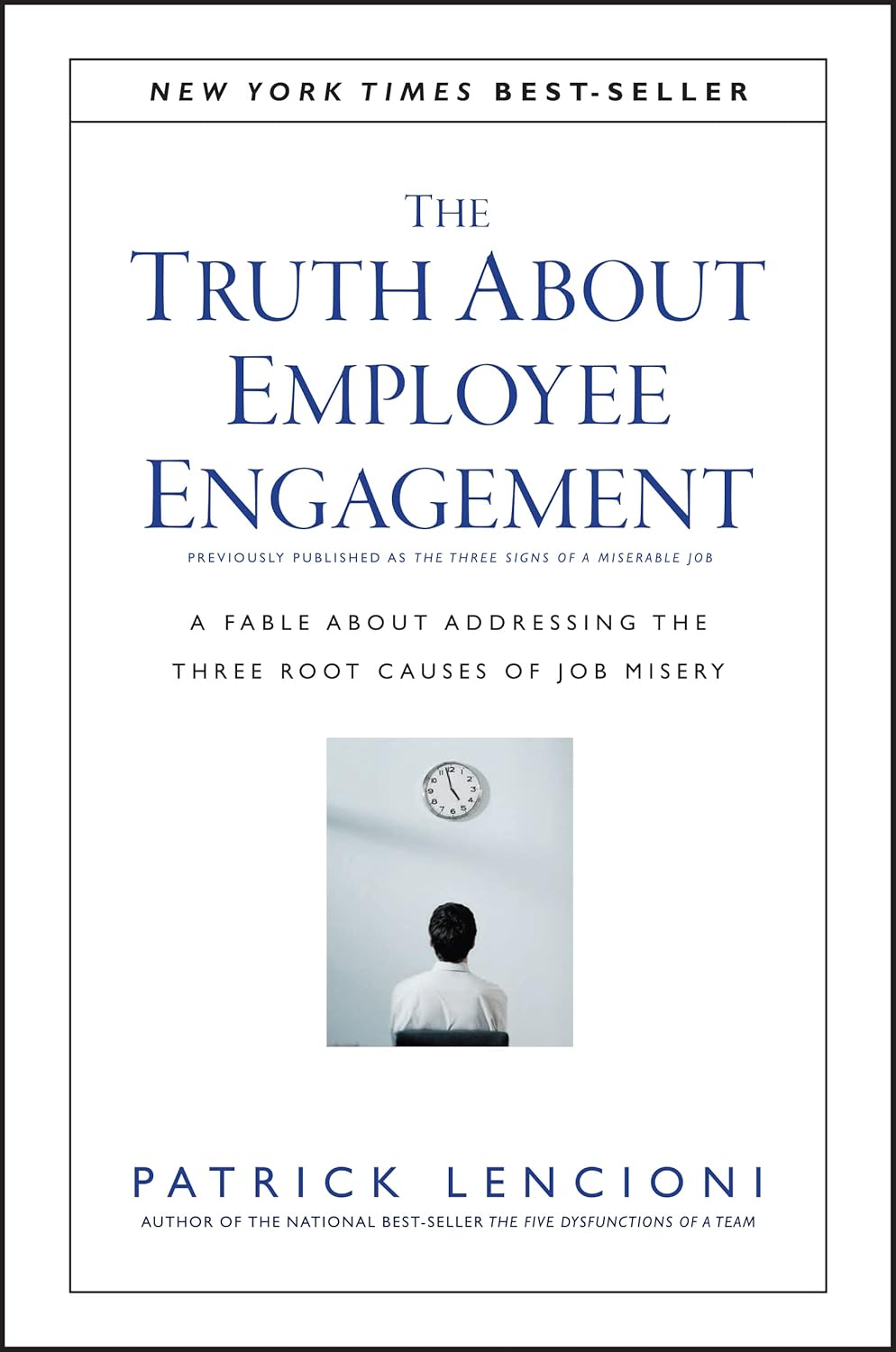
The Truth About Employee Engagement
Why I Recommend It
Patrick Lencioni’s The Truth About Employee Engagement (originally The Three Signs of a Miserable Job) explains—through a short leadership fable—why good people disengage and what any manager can do about it. It’s memorable, practical, and focused on human needs you can meet without new programs or perks.
What It’s Really About
Employee engagement rises or falls on three simple conditions:
- Anonymity — People disengage when they feel invisible to the person they work for. The antidote is a manager who takes a genuine interest in each person as a human being.
- Irrelevance — People disengage when they don’t see how their work improves life for someone. The antidote is helping them see the people who benefit—customers, teammates, or others—and why it matters.
- Immeasurement — People disengage when they can’t tell if they’re succeeding. The antidote is establishing clear, behavioral measures individuals can track themselves.
Author & Background
Written by Patrick Lencioni and published by The Table Group/Jossey‑Bass, this book uses a narrative to introduce the model, then closes with straightforward guidance for managers who want to implement it.
Why This Matters
- Engagement is primarily shaped by the manager–employee relationship.
- People want to be known, useful, and able to see progress.
- Addressing those needs transforms the daily experience of work and improves performance.
Manager Playbook
End Anonymity
• Learn about your people beyond their job descriptions.
• Offer specific, sincere recognition grounded in observed behavior.
• Hold regular check‑ins that demonstrate ongoing attention and care.
Fix Irrelevance
• Clarify who benefits from the team’s work.
• Share real stories that connect tasks to outcomes for customers or colleagues.
• Reiterate the purpose of roles during team and one‑on‑one conversations.
Cure Immeasurement
• Define a handful of concrete indicators tied to the job that employees can track on their own.
• Make expectations for “good work” explicit so progress is visible without waiting for a manager’s opinion.
• Review and refine measures so they stay meaningful and within the employee’s control.
Field Notes
- Most engagement problems are not cultural “mysteries”; they’re the result of neglected basics.
- Managers don’t need to be charismatic; they need to provide attention, purpose, and clarity.
- When these needs are met, morale and results improve together.
Who Should Read This
- Managers and supervisors at any level
- Executives seeking a simple model for improving engagement
- HR and people leaders building manager training
A Line to Remember
People want to be known, to know their work matters, and to know they’re winning. When managers provide that, engagement follows.
How to Apply
- Get to know each person you lead.
- Make the beneficiaries of their work visible and specific.
- Establish clear, self‑evident measures of success tied to the role.