
A Midday Conversation with Marcus Aurelius
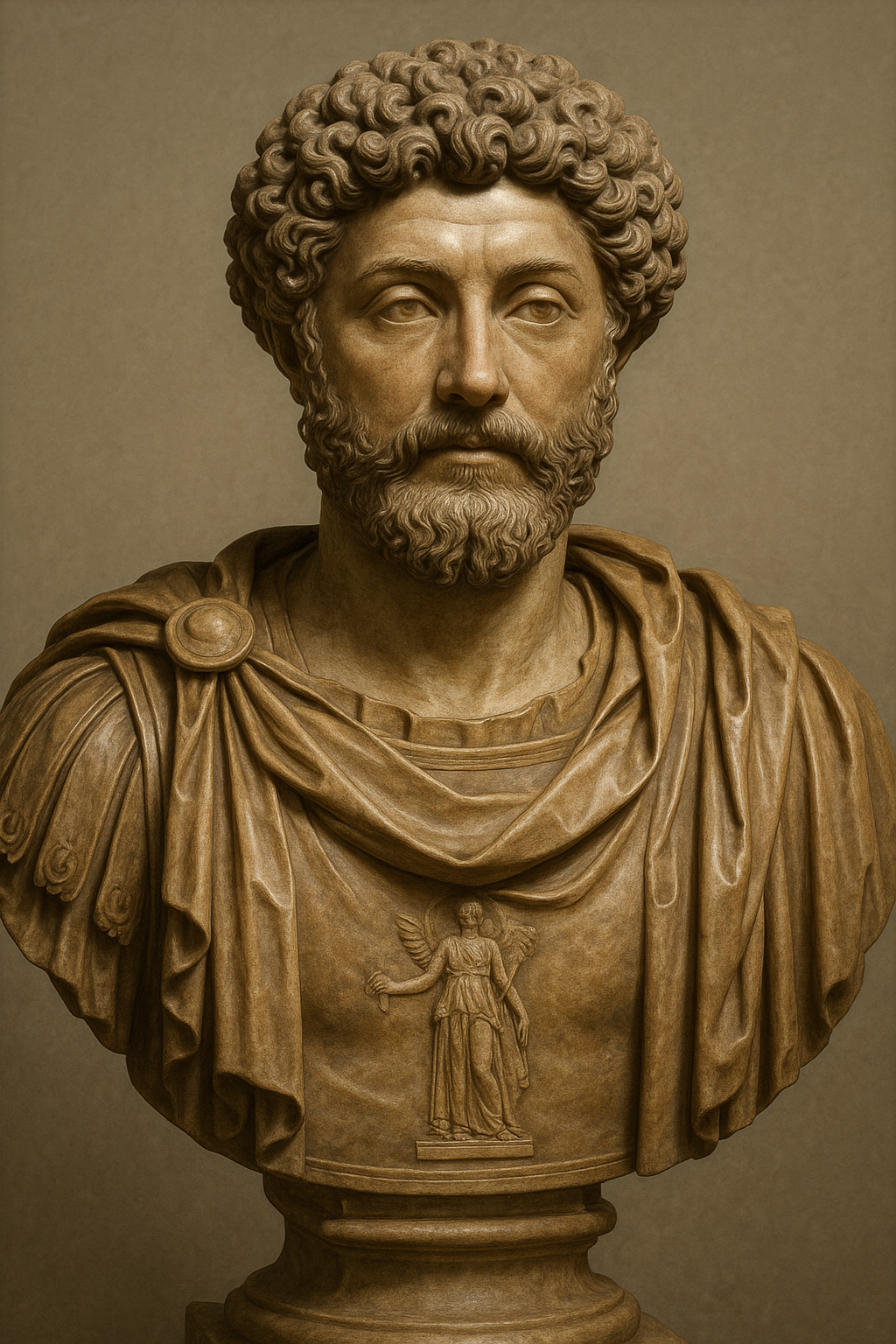
I have always been in awe of Marcus Aurelius and the more I get to know about him this emotion only grows stronger. He truly was a one of a kind leader. As part of a new blog style I am using, I am envisioning interviews I would like to have had with historical figures if given the opportunity. I hope you enjoy it.
Introduction – Who was Marcus Aurelius?
Marcus Aurelius was the Roman emperor from 161 to 180 AD, but what makes him remarkable isn’t just that he ruled one of the most powerful empires in history. It’s that he tried to rule himself first. In the middle of wars, plagues, political intrigue, and enormous responsibility, he kept a private journal—what we now call Meditations—where he wrestled with his own fears, ego, impatience, and duty. He wasn’t writing for fame. He was writing to remind himself how to think, how to act, and how to stay grounded under pressure. That alone sets him apart from many leaders who are more concerned with image than inner discipline.
He is important to the study of leadership because he embodied the idea that character is strategy. Marcus believed that a leader’s first job was self-mastery—controlling impulses, staying rational, acting with justice, and serving the common good. He understood that power exposes weaknesses; it doesn’t fix them. Instead of blaming circumstances or other people, he constantly asked, “What is within my control?” That mindset is foundational for any leader who wants to build trust and stability in turbulent times. He modeled resilience without theatrics and authority without arrogance.
For those of us who coach and develop leaders today, Marcus Aurelius remains relevant because he reminds us that leadership is not about position—it’s about discipline, perspective, and responsibility. He faced external chaos with internal order. He practiced humility while holding ultimate authority. And he demonstrated that the greatest battle for any leader is not against competitors or critics, but against their own ego, fear, and distraction. That is why he continues to matter—not as a historical figure alone, but as a living case study in principled leadership.
The Setting
The sun casts long slants of light across the Roman frontier. A canvas tent billows softly in the breeze, pitched above the banks of the Danube. Outside, soldiers polish armor and prepare for battle. Inside: quiet, the scent of parchment and pine resin, and a man dressed not in grandeur but simplicity—Marcus Aurelius, Emperor of Rome and student of the Stoic path.
He sits with his back straight, a wax tablet on his lap, the edge of a scroll gently curling open beside him. He looks up and welcomes me with a nod.
The Conversation
Me: Thank you for making time, Imperator. You carry the burdens of empire—and of philosophy. I wonder, how do you reconcile both?
Marcus Aurelius:
By remembering that both are temporary.
The throne will crumble. The scrolls will fade. What remains is how we lived while we held them.
On the First and Hardest Task: Self-Rule
Me: Where does true leadership begin?
Marcus:
Within. You must rule yourself before you can serve others.
A commander who cannot master anger is no better than a child with a sword. The Stoics teach that the only thing fully within our power is our own mind. “You have power over your mind—not outside events. Realize this, and you will find strength.”
I begin each morning by preparing for frustration, insult, betrayal. Not because I expect the worst—but because I refuse to be surprised by it. When it comes, I nod like an old friend has arrived.
On the Empire, the Republic, and His Predecessors
Me: You inherited the empire. But do you still believe in the republic?
Marcus:
Yes. I’ve always believed in the soul of the republic, even if its form has passed.
I consulted the Senate when I didn’t have to. I lived modestly, traveled with soldiers, slept on the ground. Not for show, but because power is only legitimate when it serves the common good. The title of “Emperor” means little if it corrupts the character of the man beneath it.
Me: What did you learn from the emperors who came before you?
Marcus:
From Augustus, I learned the discipline of building—of knowing when to act and when to wait. He was cunning, yes, but careful.
From Lucius Caesar—my adopted brother—I learned the fragility of men praised too early. He was good-hearted, but unprepared. Ease ruined what hardship might have refined.
And from Caligula? I learned how quickly the palace becomes a prison when ego reigns unchecked. Madness in purple robes is still madness.
The difference between a good emperor and a tyrant is not blood. It is character. And character is forged in restraint.
On Fear, Death, and Presence
Me: Do you feel fear? Even now—on the eve of battle?
Marcus: (Quietly.)
Yes. But I serve it no more than I would serve flattery.
Fear alerts us, but it must not direct us. I acknowledge it, examine it, then move past it. When I walk among the men, I let them see that steadiness is possible.
As for death—how can I fear what is inevitable for all? To the Stoic, death is not the end, but the dissolving of form. The breath returns to the air. The body returns to earth. Only the present belongs to us.
On Philosophy as a Guide to Leadership
Me: How has Stoic philosophy shaped the way you lead?
Marcus:
It has kept me from breaking. Or becoming something monstrous.
When the plague swept Rome, I stayed—not because I was brave, but because duty held me. When provinces rebelled, I met dissent with inquiry, not vengeance. Stoicism taught me that virtue must be practiced, not preached.
I do not write in my journals for history. I write to remind myself of the man I hope to be. That, too, is leadership.
On Judgment, Praise, and Emotion
Me: How do you handle the expectations and praise of the people?
Marcus:
With indifference. They cheered Nero, too.
Praise is wind. Some days it fills your sails. Other days it drives you onto rocks. I try not to steer by it.
And as for expectations—I meet them when they align with justice. When they do not, I let them pass.
Me: Do you allow yourself joy? Or must a Stoic be stone-faced?
Marcus: (Smiles gently.)
Joy, yes. Laughter, too. But mine is not joy dependent on outcomes. I take joy in duty well done, in good bread, in quiet mornings with a page of clean wax and a clear mind.
On Building Others and Preparing a Successor
Me: How do you prepare the next generation to lead?
Marcus:
With example more than instruction. With challenge, not comfort.
I failed with Commodus, I fear. I gave him Rome’s treasures but not Rome’s trials. A lesson to any leader: ease does not prepare, and inheritance is not destiny.
Me: How do you build a strong leadership bench?
Marcus:
By trusting slowly. By testing quietly. And by rewarding those who speak truth more than those who offer flattery.
The role of a leader is not to shine alone—but to ensure light remains when he is gone.
On Legacy and Letting Go
Me: What legacy do you hope to leave?
Marcus:
None. Let them forget my name. Let them remember that, for a time, the empire was governed with conscience.
If I served the people and upheld justice—even when it was hard—then that is enough.
On Final Counsel
Me: What is your final advice to modern leaders?
Marcus:
Build your inner citadel.
Lead with principle, not popularity. Govern your emotions before governing others. Seek truth, even when it humbles you.
And remember: this role, this power, this body—it is all rented. Use it wisely. Return it clean.
The Farewell
Outside, a horn sounds. His guard waits. Marcus closes his tablet, rises, and offers a final word before stepping into the sun:
Marcus:
If tomorrow you live, live well. If tomorrow you fall, fall with honor. And either way—lead without fear, for virtue walks beside you.
